

A hotel room can look perfect and still fail at 2 a.m. A truck brakes outside. Music carries from a nearby bar. Noise affects sleep, reviews and room-change requests.
Standard monolithic glass rarely solves this problem alone. Acoustic laminated glass damps vibration within the glazing. Yet the complete assembly controls the result.
Wat is akoestisch gelaagd glas?
Two or more glass lites are bonded with an interlayer. If breakage occurs, that interlayer helps retain the fragments. Acoustic versions use specially formulated acoustic PVB that absorbs more vibrational energy than ordinary PVB.
Basic Construction
The interlayer sits between the lites under heat and pressure. Its formulation and thickness influence performance. Thicker is not automatically better. Pane size and noise frequency also matter.
Lamination also adds safety value. Broken glass remains together instead of falling into a guestroom or onto a walkway.
How It Reduces Noise
Sound waves make a pane flex. That movement transfers energy from the outside surface to the inside. An acoustic interlayer slows the movement and converts part of the energy into heat. Less reaches the room.
The benefit is clear with speech or traffic. It is not complete soundproofing. A leaking vent can become the weakest path.
Why Hotels Need Acoustic Glass for Windows
Hotel guests judge noise differently from office users. A tolerable daytime disturbance becomes a complaint during sleep. Quiet rooms support better reviews and reduce relocations.
Airport hotels face aircraft. City properties deal with buses and nightlife. Highway resorts need protection from trucks. Mixed-use towers may contain event spaces.
Meeting rooms need speech privacy. Service rooms may border loading bays. Each hotel zone can have a different target.
Map the noise before selecting glass. Thickness alone does not define acoustic performance. The interlayer, cavity and frame belong in the specification.
How Acoustic Laminated Glass Reduces Outside Noise
Different markets use different ratings. A number has value only when the test method and glass construction appear beside it.
Sound Transmission Class and Weighted Sound Reduction Index
STC is widely used in North America. Rw is common in Europe and international projects. Higher values generally mean better airborne sound insulation under the stated test.
Laboratory ratings do not guarantee the same result on site. Test specimens have controlled joints. Buildings have workmanship variations.
Frequency Matters
Voices sit mainly in the mid-range. Trucks and mechanical equipment produce stronger low-frequency energy. Aircraft noise covers a broad range.
A build-up may control speech yet feel weak against low-frequency rumble. Request frequency data when one source dominates.
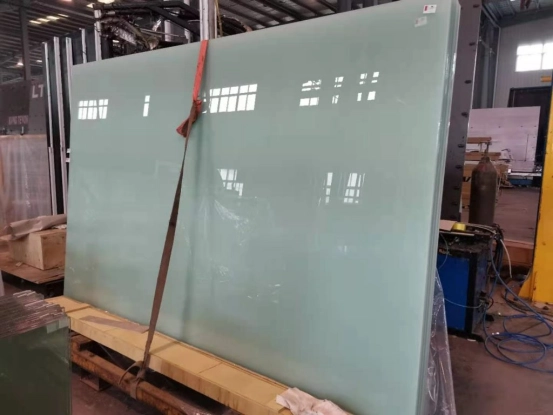
Glass Build-Up Factors
Performance is shaped by several linked decisions:
- Individual glass thickness and asymmetric panes
- Acoustic PVB type and interlayer thickness
- A laminated lite within an insulating glass unit
- Cavity width and gas filling
- Panel dimensions and aspect ratio
- Edge seals, gaskets and frame stiffness
An acoustic laminated glass IGU is practical when thermal insulation is also required.
Choosing the Right Glass Configuration for Hotel Windows
The configuration must match the noise problem and facade constraints. There is no universal “hotel glass” thickness.
Acoustic Laminated Glass as a Single Pane
Single laminated glazing can suit interior partitions or shallow retrofits. It usually outperforms a monolithic lite of similar thickness. High-noise external facades may require more.
Acoustic Laminated Glass in an Insulating Glass Unit
An IGU combines panes with a sealed cavity. A laminated lite adds damping while the cavity supports thermal performance. Asymmetric panes are less likely to respond strongly at the same frequency.
Check solar gain, condensation risk and frame depth. Triple glazing can help, but its weight affects hardware. Calculations are cheaper than a late revision.
Combining Acoustic and Solar-Control Functions
Hotels in hot climates often need low-E or solar-control coatings. Visible light and color still require review.
Confirm coating compatibility with lamination and IGU processing. A good sample is not enough if the fabrication route cannot reproduce it at project scale.
The Window Frame and Installation Are Just as Important
Glass cannot compensate for an air leak. Continuous gaskets and sealed frame joints protect the acoustic design. Perimeter sealant must connect the frame to the wall without breaks.
Curtain wall interfaces deserve attention. Spandrel zones can create flanking paths. Even a small service gap may be audible. A facade mock-up can expose weaknesses before production.
For replacement work, check the existing frame and gaskets. New glass in a loose frame may disappoint.
Acoustic Laminated Glass Standards and Project Testing
Project documents should name a test standard. ASTM E90 measures laboratory airborne sound transmission loss. ASTM E413 classifies STC. ISO 10140 covers laboratory testing. ISO 717 provides rating methods.
Request reports tied to the exact glass composition. Confirm local equivalents with the acoustic consultant.
For a major hotel, test a representative mock-up. Site testing can identify installation defects.
How to Specify Acoustic Glass for a Hotel Project
Use this checklist during design coordination:
- Project location and dominant noise sources
- Required indoor noise target for each room type
- Window, curtain wall or facade system
- Target STC or Rw value
- Glass composition and interlayer type
- Thermal and solar-control requirements
- Safety, impact and fire-related requirements
- Maximum panel size and processing limits
- Applicable regional standards
- Mock-up or on-site testing requirements
Send the window schedule early. Include drawings, target ratings, dimensions and estimated quantities. The manufacturer can then flag weight, processing or packaging issues before the purchase order.
Why Work with a Specialized Architectural Glass Supplier?
A specialist reviews glass as part of the facade. That may expose a mismatch between the required rating and the proposed frame.
Landson Glass supplies architectural glazing for overseas projects. Its range includes gelamineerd glas and geïsoleerde glazen eenheden. Related gehard glas can be coordinated where safety or thermal-stress requirements apply. Project teams can approach the architectural glass supplier with dimensions and performance targets.
Conclusie
Hotel noise control is a system decision. Acoustic laminated glass makes a real difference when the interlayer and pane arrangement match the noise source. Airtight frames and careful installation protect that investment.
Planning a hotel, resort or commercial facade? Share the window schedule, acoustic target, dimensions and quantity with the Landson Glas. A project-specific configuration is more useful than a generic thickness recommendation.
Veelgestelde vragen
Vraag: Is acoustic laminated glass the same as soundproof glass?
It is one component of a sound-control window. Frames and seals also affect the result. “Soundproof” is not a guarantee.
Vraag: Is thicker glass always better for hotel windows?
No. Pane asymmetry and acoustic PVB also matter. Extra thickness may add weight without controlling the dominant frequency.
Vraag: Can acoustic laminated glass also provide thermal insulation?
Yes. It can form part of an IGU with low-E or solar-control glass. Check thermal performance and frame depth.
Vraag: What information should be sent for a quotation?
Provide drawings, target STC or Rw values, glass sizes, coating needs and quantities. Site location and delivery requirements also help with logistics.
Vraag: Is mock-up testing necessary for every hotel?
Not always. It is especially valuable near airports, highways or entertainment districts. A mock-up can expose leaks before the production run.