

“Will these units be all right at altitude?” is a perfectly valid question for the glass supplier. How high is the site? How large are the glass panels? Which road will the supplier take? These considerations for high-altitude insulated glass units can alter the specification once thermal performance and appearance have been agreed. Clear up these issues prior to sealing the units.
What Makes High-Altitude Insulated Glass Units Different?
The Relationship Between Manufacturing and Installation Altitude
Elevation of the site and elevation of the manufacturer’s factory are both important factors. A house at 2,000m presents different elevation changes for a factory at 1,900m than for one near sea level. The trapped gas changes pressure with temperature and with cavity movement after sealing. Include both elevations when specifying geïsoleerde glazen eenheden.
How Atmospheric Pressure Changes at Different Elevations
Air pressure decreases with elevation while traveling upwards to higher ground, which means that the external pressure against an IGU’s glass surfaces will decrease. This can allow the trapped gas to force the glass surfaces outward. In traveling downward, increasing external pressure can cause inward bowing. Changes in temperature can reinforce or counteract these movements.
How Pressure Differences Cause IGU Deflection
Understanding Pressure and Volume Changes Inside Sealed IGUs
Boyle’s Law describes the pressure-volume relationship at constant temperature. As the glass center bows outward, the volume of gas between the panes increases and its pressure decreases. A computation for an IGU will have to include this process and corresponding changes in gas pressure. PV = nRT also accounts for temperature and gas quantity.
Common Problems Caused by Excessive Glass Deflection
The bowing of IGUs can result in unsightly distortion of reflections and excessive stress on the pane and its seal. Reduced clearances around internal bars can be a problem, as can impaired window operation. Inward bowing brings the panes closer together. Excessive stress can cause glass breakage.
Key Factors That Influence IGU Pressure and Deflection
Glass Size and Aspect Ratio
A long narrow glass pane is not identical with a square pane of the same surface area. Their bending spans are not equal. Width and height must be noted in the glass schedule; surface area alone is not sufficient.
Glass Thickness and Type
Thicker glass will resist bowing more than thinner glass. Heat-strengthened and gehard glas are stronger than annealed glass, but have substantially the same stiffness at equal thickness. The behavior of the interlayer of a laminated pane at the relevant temperatures must also be taken into account.
Insulating Glass Cavity Width
Remember that initial gas volume in the IG cavity will change with the cavity width, as well as how the IG unit will behave as the panes deflect. Check spacer width for given IG glass thicknesses and dimensions.
Temperature and Environmental Conditions
Design drawings need to be reviewed against the effect of sun-heated cavity gas and expected storage and transport temperatures. Vented cavities need to be reviewed for moisture entry. For triple-glazed IGUs both cavities need review as well as their interaction with the middle pane.
Designing the IGU Edge Seal and Pressure-Equalization System
The Role of Primary and Secondary Edge Seals
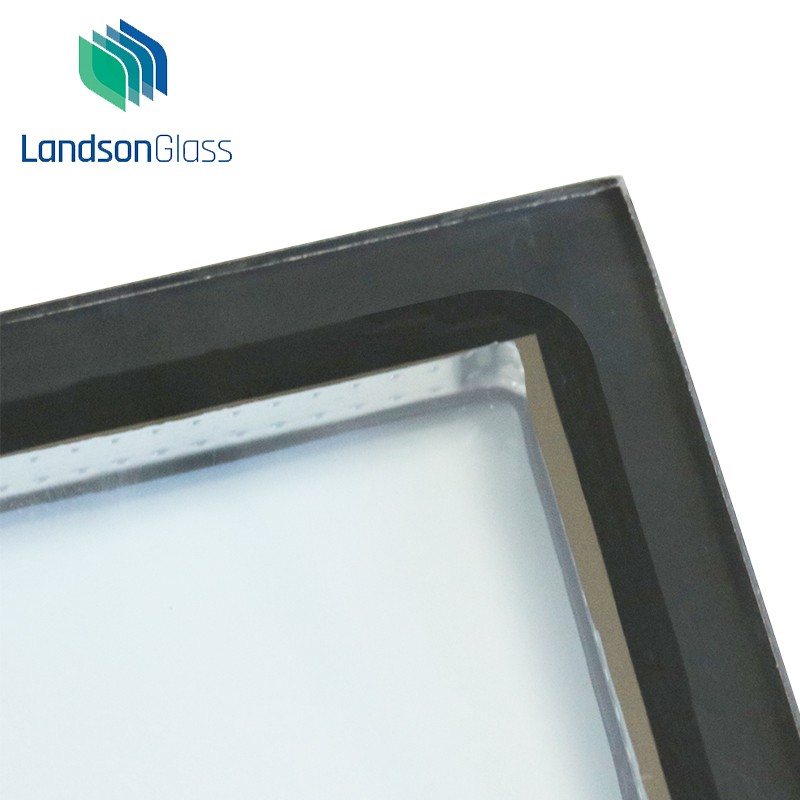
Typically, there are two jobs to be done at the IGU edge: the primary seal limits moisture penetration and gas loss, and is typically polyisobutylene (PIB); the secondary seal provides mechanical support, using polysulfide, polyurethane or silicone depending on the glazing detail, exposure and adjoining materials.
For IGU edge seal design it is not sufficient to state that “silicone” or “polysulfide” was used. Seal dimensions and adhesion have to be checked, as does compatibility with glass coatings, spacers and desiccant. Particular attention needs to be paid to exposed edges and structural glazing. A material replacement requires review of the whole combination.
When Should Capillary Tubes Be Considered?
Capillary tubes may provide pressure relief where the sealed design cannot accommodate altitude changes. The tubes connect the cavity to ambient air. A tube must have a specified size, position and handling procedure. Access for work after arrival must be allowed by the glazing detail. The time required for equalization depends upon the system and should be obtained from the fabricator.
Balancing Pressure Equalization and Long-Term Sealing Performance
However, an open passage through capillary tubing allows the argon to escape. Moisture-rich air can enter through the same passage, and desiccant has limited capacity. Check with the manufacturer whether the system requires closure after equalization or is designed to remain open. Do not assume that an air-filled unit’s instructions apply to an argon-filled order.
What Should Project Buyers Confirm Before Ordering High-Altitude IGUs?
Essential Information to Share with Your IGU Supplier
Make sure the following points are noted before acceptance of the proposed construction:
The manufacturing elevation vs. the installation elevation vs. the highest point that the unit will encounter on route to site.
Pane sizes, thicknesses, glass types and cavity widths.
Gas-fill requirements, spacer system and edge-seal specification.
Expected temperatures, glazing details and required performance.
Record who will be responsible for carrying out equalisation and for closing any capillary tubes that were opened up for equalisation at the destination.
Why Early Supplier Coordination Matters
When planning projects that include insulated glass units, it is far easier to change specifications before manufacture than it is to replace products already delivered to a construction site. Report any changes to the specified route. Obtain written project-specific recommendations for both procurement and installation teams, so that the required procedures are clear before delivery.
How Landson Glass Supports Project-Specific IGU Requirements
Please send the relevant drawings, route elevations and performance criteria to Landson Glass as a custom IGU enquiry. Architectural processing for international markets dates back to 2002; production equipment includes Glaston IGU lines. Check the proposed model against the AS 4666:2012 certification scope. Certification alone is not proof that a specific model will be suitable for a given elevation change.
When designing for pressure, deflection and sealing at high altitude, remember to include the transport route in early discussions. Neem contact op met Landson Glass with your drawings and elevations to discuss the proper construction for your project.
Frequently Asked Questions About High-Altitude IGUs
Do All High-Altitude Insulated Glass Units Need Capillary Tubes?
No. Units with different pane sizes and cavity designs need assessment against manufacturing and installation conditions, including the route traveled and temperatures expected, to establish whether pressure relief is required and by what method.
Can Argon-Filled IGUs Be Used at High Altitudes?
Yes, when designing for pressure and deflection the design for gas retention must also be addressed. Open capillary tubes allow argon to escape. The original thermal performance of gas-filled IGUs should not be expected to be maintained once an open route for gas exchange has been created.
How Can IGU Manufacturers Prevent Glass Deflection During Transportation?
When delivering insulated glass units to high elevation sites the route must be assessed and appropriate pressure management arranged. While packaging protects against physical damage, it cannot prevent changes in atmospheric pressure. Define acceptable deflection and stress before delivery; perfectly flat panes throughout the journey should not be assumed.