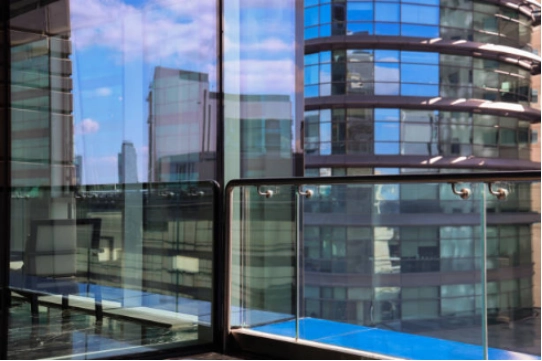


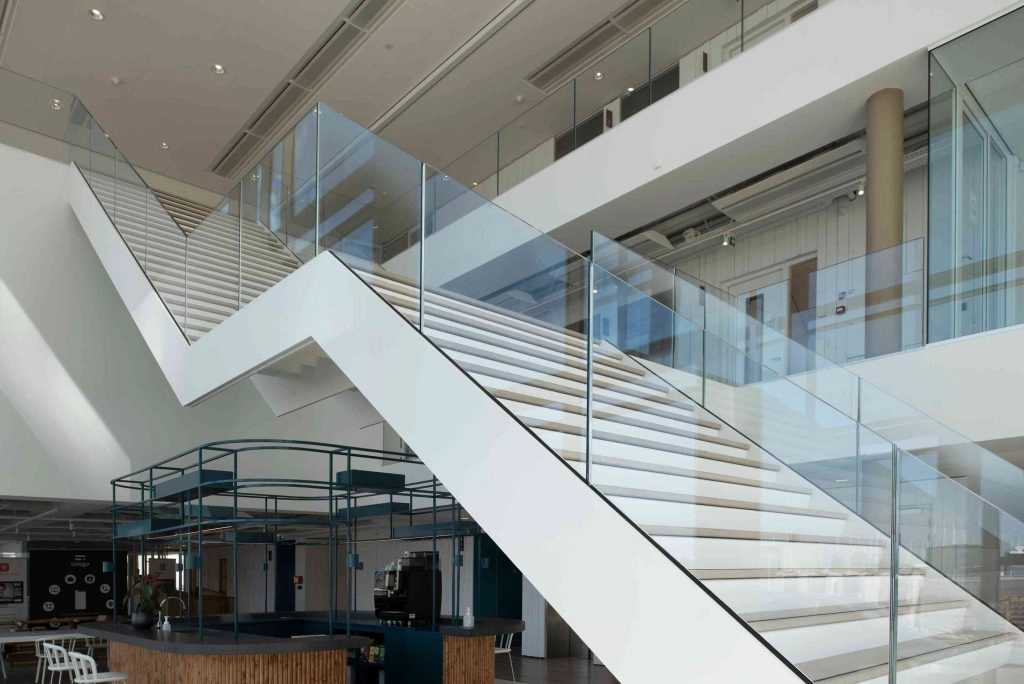
Les garde-corps commerciaux sont des éléments de sécurité essentiels. Le verre doit résister aux charges prévues, supporter les chocs et conserver un comportement acceptable après bris.
Pour la plupart des projets, le verre de sécurité feuilleté composé de vitres entièrement trempées ou renforcées thermiquement constitue un bon point de départ. La composition finale doit toutefois tenir compte des dimensions des panneaux, des conditions de support, des charges, de l'exposition et des réglementations locales en matière de construction. Il n'existe pas d'épaisseur unique convenant à tous les garde-corps commerciaux.
Quel est le meilleur verre pour les balustrades commerciales ?
Dans la plupart des applications commerciales, le verre de sécurité feuilleté, fabriqué à partir de verre entièrement trempé ou renforcé thermiquement, est le choix privilégié.
La raison principale réside dans le comportement du panneau après bris. Un panneau monolithique en verre trempé offre une bonne résistance aux chocs, mais perd généralement sa fonction de barrière après une rupture. Le verre feuilleté, quant à lui, contient une couche intermédiaire qui retient les fragments et contribue à maintenir le panneau en place.
Verre stratifié trempé Le verre feuilleté renforcé thermiquement est généralement choisi lorsqu'une résistance élevée est requise. Il peut être utilisé lorsque la qualité optique, la résistance à la rupture ou la capacité résiduelle sont prioritaires. Un traitement thermique et des intercalaires structurels peuvent être ajoutés pour les panneaux destinés aux immeubles de grande hauteur, à l'extérieur ou difficiles à remplacer.
Comparaison des principales options de vitrage
Verre monolithique entièrement trempé
Le verre trempé est nettement plus résistant que le verre recuit de même épaisseur et se brise en particules relativement petites.
Son principal inconvénient réside dans le fait que la résistance avant rupture ne garantit pas la sécurité après rupture. Une fois le panneau défaillant, il peut laisser une ouverture dans le garde-corps. Son utilisation est donc souvent restreinte par les réglementations locales ou limitée aux systèmes dotés de protections supplémentaires.
Verre stratifié trempé
Le verre feuilleté trempé allie une grande résistance à une couche intermédiaire qui retient les fragments brisés. Si l'une ou les deux couches cèdent, le panneau a plus de chances de rester en place et de constituer une barrière temporaire.
Il est largement utilisé pour les balcons commerciaux, les escaliers, les hôtels et les bureaux. Ses performances dépendent de l'épaisseur du verre, de la couche intermédiaire, du mode de support et de la qualité du feuilletage.
Verre feuilleté renforcé thermiquement
Verre renforcé à la chaleur Il est plus résistant que le verre recuit, mais sa compression superficielle est inférieure à celle du verre trempé. Sa plus grande amplitude de fracture peut aider certains assemblages feuilletés à conserver leur forme après une rupture.
Elle peut également offrir une meilleure planéité optique. Toutefois, elle ne doit pas être considérée comme une barrière de sécurité autonome et doit être évaluée dans le cadre de l'ensemble du stratifié.
Verre feuilleté trempé à chaud
Le trempage thermique est un procédé supplémentaire appliqué après le revenu pour identifier, avant l'installation, une proportion de panneaux contenant des inclusions critiques de sulfure de nickel.
On l'utilise souvent pour les façades d'immeubles de grande hauteur, les balcons extérieurs et les panneaux difficiles à remplacer. Bien qu'elle ne puisse éliminer tout risque de bris spontané, une mise en œuvre rigoureuse permet de réduire ce risque.
Cinq facteurs qui déterminent les spécifications correctes du verre
1. Système de garde-corps et méthode de fixation
Les panneaux de remplissage encadrés, les systèmes de semelles de base, les panneaux à fixation ponctuelle et les balustres en verre structurel créent tous des conditions de contrainte différentes.
Un panneau sans cadre fixé en partie basse agit comme un porte-à-faux, tandis qu'un vitrage fixé ponctuellement concentre les contraintes autour des trous percés. Le vitrage doit donc être conçu comme faisant partie intégrante du système de garde-corps.

2. Dimensions, hauteur et charges de conception des panneaux
L'épaisseur des garde-corps commerciaux ne peut être déterminée uniquement en fonction du type de bâtiment. La largeur et la hauteur des panneaux, les conditions de support, la pression du vent, les charges linéaires, les charges concentrées et les charges dues à la foule influent toutes sur les contraintes et la déformation.
Les panneaux de grande taille peuvent nécessiter un verre plus épais, des plis supplémentaires ou une couche intermédiaire plus rigide. La composition finale doit être justifiée par des calculs de structure, des essais ou toute autre méthode approuvée.
3. Exposition intérieure ou extérieure
Les balustrades extérieures sont exposées à l'humidité, aux variations de température, aux rayons ultraviolets et aux contaminants. Les projets côtiers peuvent également être confrontés à la corrosion due au sel et aux ferrures.
Lorsque les bords du stratifié sont exposés, la couche intermédiaire doit être adaptée à l'environnement. Les mastics, les joints, les cales de pose et les produits de nettoyage doivent également être compatibles.
4. Sélection de la couche intermédiaire
Le PVB est largement utilisé pour le verre de sécurité feuilleté classique et convient à de nombreuses applications commerciales encadrées et protégées.
Des couches intermédiaires en ionoplaste structurel peuvent être spécifiées lorsqu'une rigidité plus élevée, une déflexion réduite ou une meilleure performance après rupture sont requises, notamment dans les systèmes sans cadre, à support minimal ou exposés de l'extérieur.
La sélection doit se fonder sur les performances testées et les conditions du projet, et non pas simplement sur le nom du produit.
5. Traitement et qualité des bords
Balustrade en verre Elles comportent souvent des bords exposés, des trous, des encoches et des découpes. Ces éléments peuvent devenir des points de concentration de contraintes si la qualité de fabrication est médiocre.
Toutes les opérations de découpe, de perçage, de polissage et d'usinage CNC doivent être effectuées avant le traitement thermique. Les bords doivent être polis de manière uniforme, les trous doivent respecter les tolérances et les plis de laminage doivent être parfaitement alignés. Tout dommage sur les bords peut réduire la résistance du verre.
Configurations de vitrage recommandées par application commerciale
Garde-corps intérieurs à cadre
Le verre de sécurité feuilleté trempé convient généralement aux garde-corps intérieurs à cadre. Le PVB architectural standard peut convenir lorsque le panneau est bien soutenu et que les bords du verre feuilleté sont protégés.
La conception doit néanmoins tenir compte de la taille des panneaux, des charges d'impact et de la norme applicable.
Balcons et terrasses extérieurs
Les systèmes extérieurs utilisent généralement du verre feuilleté trempé ou du verre feuilleté renforcé thermiquement. Il convient de prévoir un traitement thermique, des intercalaires résistants et une protection des bords adaptée.
Il faut également tenir compte des charges dues au vent, du drainage, des mouvements thermiques et de la compatibilité du matériel.
Garde-corps sans cadre ou à fixation ponctuelle
Les systèmes sans cadre et à fixation ponctuelle nécessitent une ingénierie spécifique à chaque projet. La construction stratifiée avec une couche intermédiaire structurelle est souvent privilégiée car ces panneaux comportent moins de supports et sont soumis à des exigences de résistance à la rupture plus élevées.
La qualité des trous, la distance au bord, la conception des raccords et les tolérances de fabrication doivent être rigoureusement contrôlées.
Projets de grande hauteur et à fort trafic
Les immeubles de grande hauteur et les espaces publics très fréquentés requièrent généralement des spécifications rigoureuses. Le verre feuilleté, le traitement thermique documenté, la traçabilité de la production et la vérification des performances après bris doivent faire partie de l'analyse.
L'accès pour le remplacement du verre et les conséquences de la chute de verre devraient également influencer la décision.
Quelles questions les acheteurs doivent-ils poser à un fournisseur de verre pour balustrades ?
Les acheteurs doivent vérifier plus que le prix et l'épaisseur nominale. Ils doivent se renseigner sur les normes de vitrage de sécurité auxquelles le produit répond, sur la disponibilité de données d'essais spécifiques au projet et sur les étapes de fabrication réalisées en interne.
Le fournisseur doit expliquer les options de couches intermédiaires disponibles, la capacité de traitement thermique, les tolérances de bord, le contrôle des perforations et la traçabilité de la production. Les acheteurs à l'export doivent également examiner l'emballage et la documentation.
Un fournisseur compétent doit examiner les plans, les détails de fixation et les normes requises avant la production.
Pourquoi choisir Landson Glass pour vos projets de garde-corps commerciaux ?
verre Landson Fournit du verre architectural transformé aux marchés de la construction à l'étranger, notamment aux entrepreneurs en façades, aux fabricants de fenêtres et de portes, aux acheteurs de projets, aux importateurs et aux distributeurs.
Ses capacités incluent le traitement thermique, le laminage, le polissage des chants, le perçage, l'usinage CNC et la découpe au jet d'eau. Les panneaux de garde-corps peuvent être fabriqués sur mesure, avec des dimensions, des perçages, des découpes, des finitions de chants et des combinaisons de stratifiés spécifiques à chaque projet.
Pour obtenir un devis précis, les acheteurs doivent fournir des plans, les quantités, les détails de fixation, les normes requises, la couche intermédiaire préférée et l'emplacement du projet.
Questions fréquemment posées
Q : Le verre trempé seul convient-il aux garde-corps commerciaux ?
Son utilisation peut être autorisée dans certains cas, selon la conception du garde-corps et la réglementation locale. Le verre de sécurité feuilleté offre généralement une meilleure rétention des fragments et une protection accrue après bris. Le choix final doit être validé par l'ingénieur du projet.
Q : Quelle doit être l'épaisseur du verre des balustrades commerciales ?
Il n'existe pas d'épaisseur universelle. L'épaisseur requise dépend des dimensions du panneau, des conditions de support, des charges de conception, du type de verre, de l'intercalaire et des normes locales. Le choix doit être justifié par des calculs structurels ou des données d'essais validées.
Q : Le SGP est-il meilleur que le PVB pour les garde-corps en verre ?
Une couche intermédiaire en ionoplaste structurel peut offrir une rigidité accrue et une meilleure résistance à la rupture dans les systèmes exigeants. Le PVB reste adapté à de nombreuses applications classiques avec cadre. Le choix de la meilleure option dépend du support, de l'exposition et des performances requises.
Q : Le verre des balustrades extérieures doit-il être trempé à la chaleur ?
Le trempage thermique est souvent envisagé pour les panneaux trempés destinés aux immeubles de grande hauteur, aux applications extérieures ou difficiles à remplacer. Sa nécessité dépend des spécifications du projet, des normes applicables et de l'évaluation des risques.
Conclusion
Pour la plupart des balustrades et garde-corps commerciaux, le verre de sécurité feuilleté, composé de vitres trempées ou renforcées thermiquement, constitue un excellent point de départ. La solution optimale doit toutefois être conçue en tenant compte des dimensions des panneaux, du système de support, des charges, de l'intercalaire et des conditions environnementales.
Une coordination précoce entre l'ingénieur, l'entreprise de pose de garde-corps et le fabricant de verre permet de réduire les modifications de conception et les risques liés au chantier. Landson Glass peut examiner les plans et fournir du verre transformé sur mesure pour les projets de garde-corps commerciaux à l'étranger.