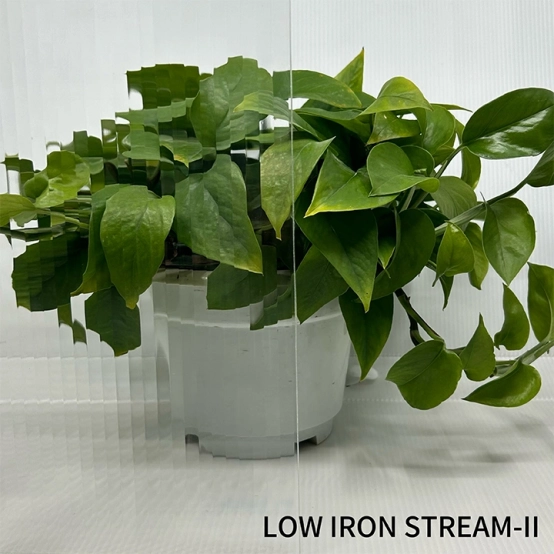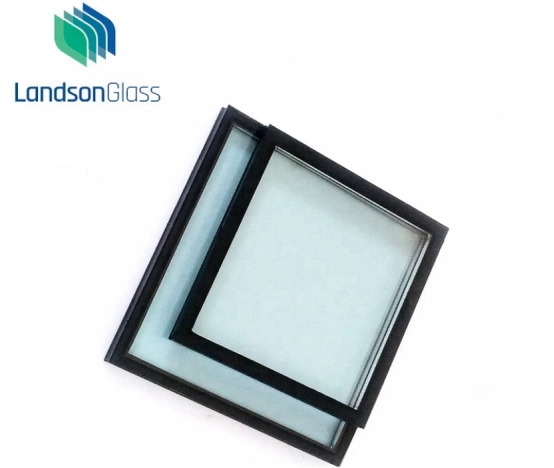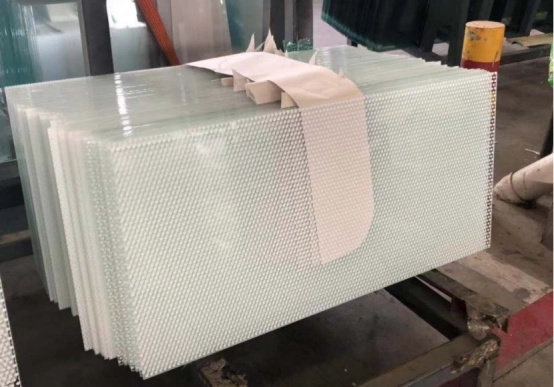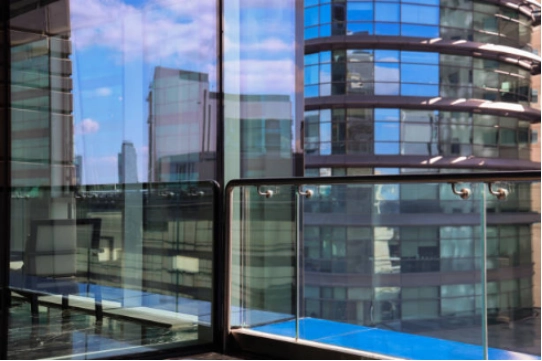


In a low-iron glass vs clear glass decision, the right choice depends on what the viewer must see and how much edge remains visible. Low-iron glass reduces the green cast associated with standard clear glass, producing a more neutral appearance through the pane and at the edge. Clear glass usually costs less and is adequate where color is hidden, non-critical, or viewed from a distance. The low-iron premium is easiest to justify when color accuracy, exposed edges, or display quality affect approval and replacement risk.
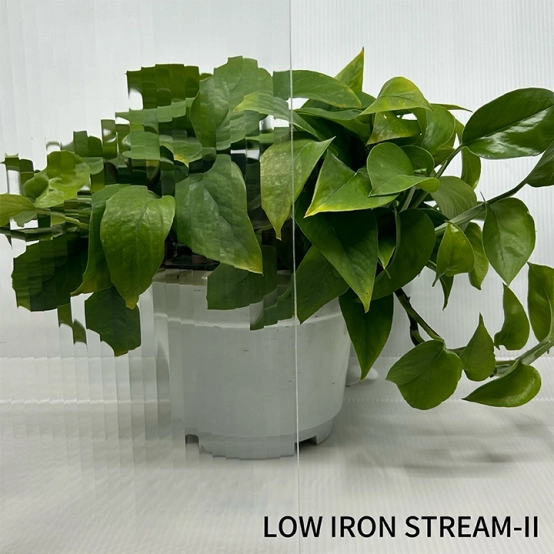
What Is the Difference Between Low-Iron Glass and Clear Glass?
Iron compounds in ordinary float glass create a subtle green tint. The effect is easy to miss in a thin, clear opening but becomes more visible in thicker glass, laminated edges, stacked panes, and bright backgrounds. Low-iron glass reduces that cast, so white surfaces, product colors, water views, and transmitted daylight look more neutral.
The distinction is optical, not a complete performance specification. Low-iron glass is not automatically stronger, safer, or more energy efficient than clear glass. Either base can be insulated glass units for exterior performance, laminated, tempered, coated, or combined with other processing. The build-up and processing route still determine safety, thermal, acoustic, and structural results.
| Decision Factor | Low-Iron Glass | Standard Clear Glass |
| Color through the pane | More neutral | More likely to show a green cast |
| Exposed edge | Cleaner, less green appearance | Green edge is more apparent |
| Initial material cost | Usually higher | Usually lower |
| Best fit | Color-critical or edge-visible work | General, concealed, or budget-led glazing |
Ask whether the project will visibly benefit from a more neutral glass base.
When Is Extra Clarity Worth the Cost?
Low-iron glass earns its premium when a color shift could trigger rejection or weaken a design. Typical examples include museum and retail displays, showcases, luxury hospitality interiors, aquariums, pool-view glazing, glass furniture, feature walls, and balustrades with visible laminated edges. It is also valuable when a white finish, pale stone, product packaging, or brand color must remain accurate behind the glass.
Edge exposure is often decisive. A pane with a concealed rebate may show little difference from the normal viewing position. The same pane in a butt-jointed corner, frameless door, or transparent railing can reveal base color along every exposed edge. Thickness and laminate interlayers can increase the effect.
Use the quotation rather than a guess to test the premium:
Incremental clarity cost = (low-iron price per m2 – clear-glass price per m2) x glazed area
If the quoted difference is P per m2 and the project has A m2 of visible glazing, the decision cost is P x A. Compare it with a rejected mock-up, late replacement, or visible mismatch. This is an illustrative framework, not a Landson price or promised return.
Choose low-iron when the edge is exposed, color is judged against a sample, or the glazing is a signature element. Keep clear glass when the edge is hidden or the opening is non-color-critical.
How Does Low-Iron Glass Affect Color, Edges, and Light?
Low-iron glass changes the starting color, not reflection. Reflections, glare, and tonal changes still vary with daylight, coatings, finishes, and viewing angle. A neutral base simply adds less green to the transmitted view.
A clear laminated panel can show a green band when viewed through its thickness. Low-iron glass generally reduces it, but the result still depends on thickness, interlayer color, sealants, edge finishing, and illumination. For visible safety edges, compare the intended laminated safety glass for visible edges and overhead applications build-up rather than monolithic sheets.
A low-iron base may improve neutrality, but solar-control or low-emissivity coatings can change visible light and reflected color. Review the complete make-up, coating position, cavity, and frame system. Approve a representative corner or full-size mock-up under realistic lighting; a phone photograph is not a reliable color standard.
How Should Buyers Specify Low-Iron Glass?
Do not request “extra-clear glass” as a stand-alone label. Put the visual requirement into a build-up-specific RFQ:
- Base glass type, nominal thickness, sheet dimensions, and allowable size tolerances.
- Exposed edges, joints, rebates, holes, cut-outs, curves, and the viewing distance.
- Whether the panel is to be tempered glass processing for safety and shape requirements, heat-strengthened, laminated, or assembled as an IGU.
- Interlayer type and color, coating or frit, cavity, gas, spacer, and coating position where applicable.
- The required color reference, edge appearance, visible-light target, and mock-up approval method.
- Applicable product and test standards, inspection stage, sample size, batch consistency, packaging, and delivery schedule.
Keep optical and energy questions separate. The existing Low-E glass performance for thermal decisions addresses heat transfer and solar control; low-iron selection addresses the visual base. A project may need both, but one label cannot replace the other.
Where Is Clear Glass Still the Better Choice?
Standard clear glass remains sensible for internal partitions, utility doors, concealed edges, printed or opaque panels, and areas where transmitted color is not being judged. It also fits small, low-risk elements with no premium visual benchmark.
Do not use the lower price to bypass a mock-up, or pay for low-iron simply because it sounds advanced. If the edge is hidden and the background is not color-critical, the premium may buy little. Energy, safety, and structural performance still depend on the complete system.
FAQ
These answers cover common specification questions that sit between the optical decision and the final quotation.
Can Low-Iron Glass Be Tempered or Laminated?
Yes, when the selected thickness, interlayer, dimensions, and processing route are suitable. Tempering or lamination addresses safety and strength; low-iron addresses color neutrality. Specify both requirements rather than treating either as a substitute.
Does Low-Iron Glass Improve Thermal Performance?
Not by itself. U-value and solar control depend on coating, cavity, gas, pane arrangement, frame, and installation. A low-iron base can be used in an IGU, but calculate the thermal target for the complete make-up.
Is Low-Iron Glass Always Clearer at Every Thickness?
Its lower color cast is usually most noticeable at exposed edges and in thicker or laminated build-ups. Appearance still depends on interlayers, coatings, lighting, and viewing conditions. Approve the actual configuration, not only a monolithic sample.
How Can a Buyer Justify the Low-Iron Premium?
Multiply the quoted difference by glazed area, then compare it with visual risk, approval requirements, replacement difficulty, and color accuracy. The premium is easier to defend when the edge is exposed or the glass is a signature element.
What Should You Send for a Glass Build-Up Review?
Send the project location, application, panel sizes, exposed-edge details, glass build-up, safety and thermal targets, color expectations, quantity, and delivery timing. You can send the glass schedule to Landson Glass for a project-specific quotation and manufacturability review.