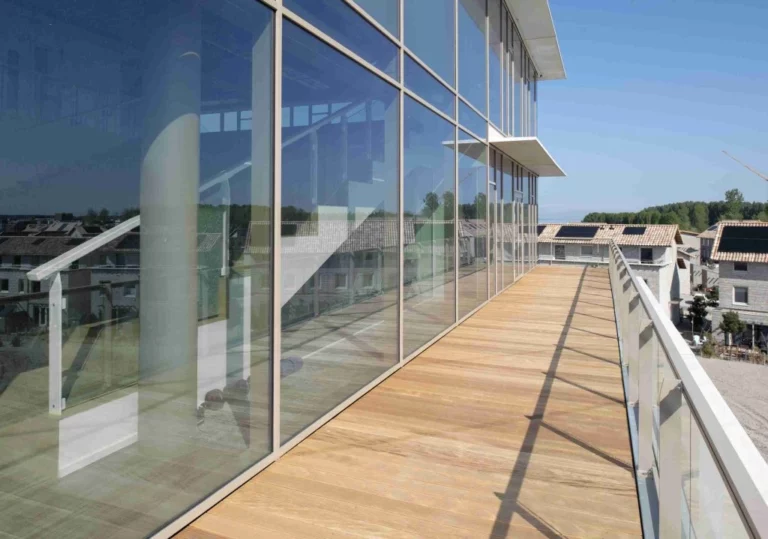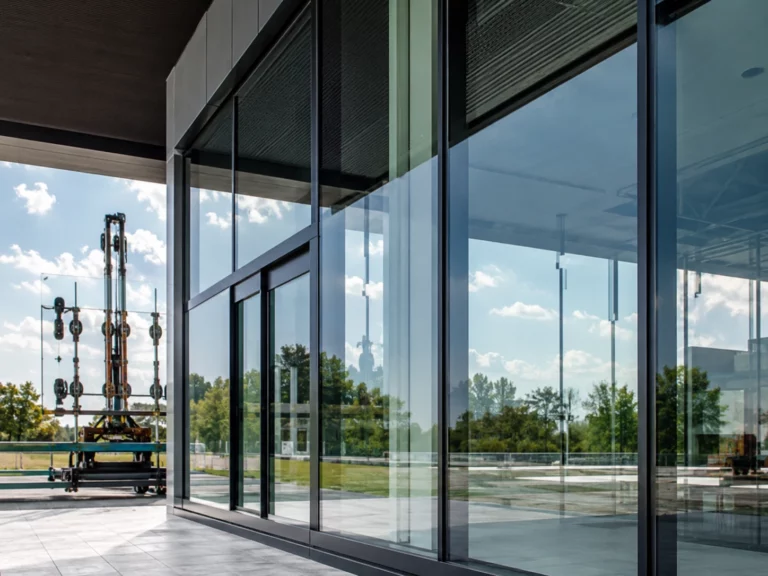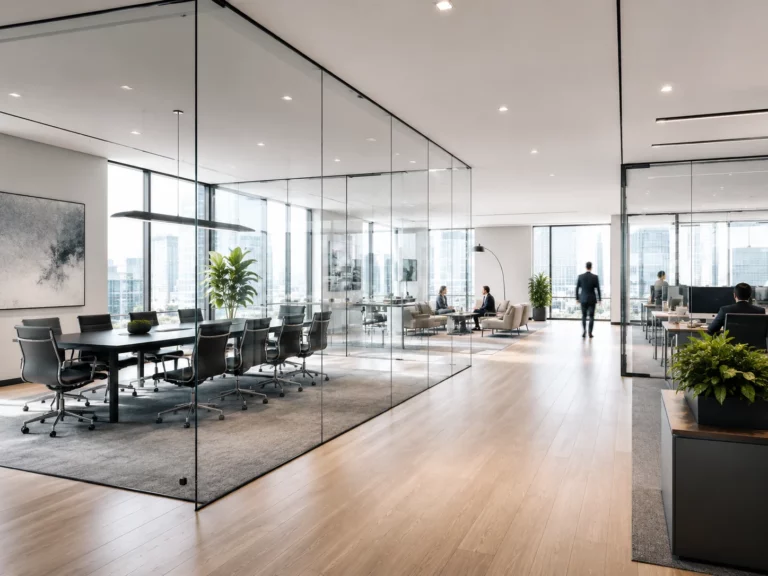

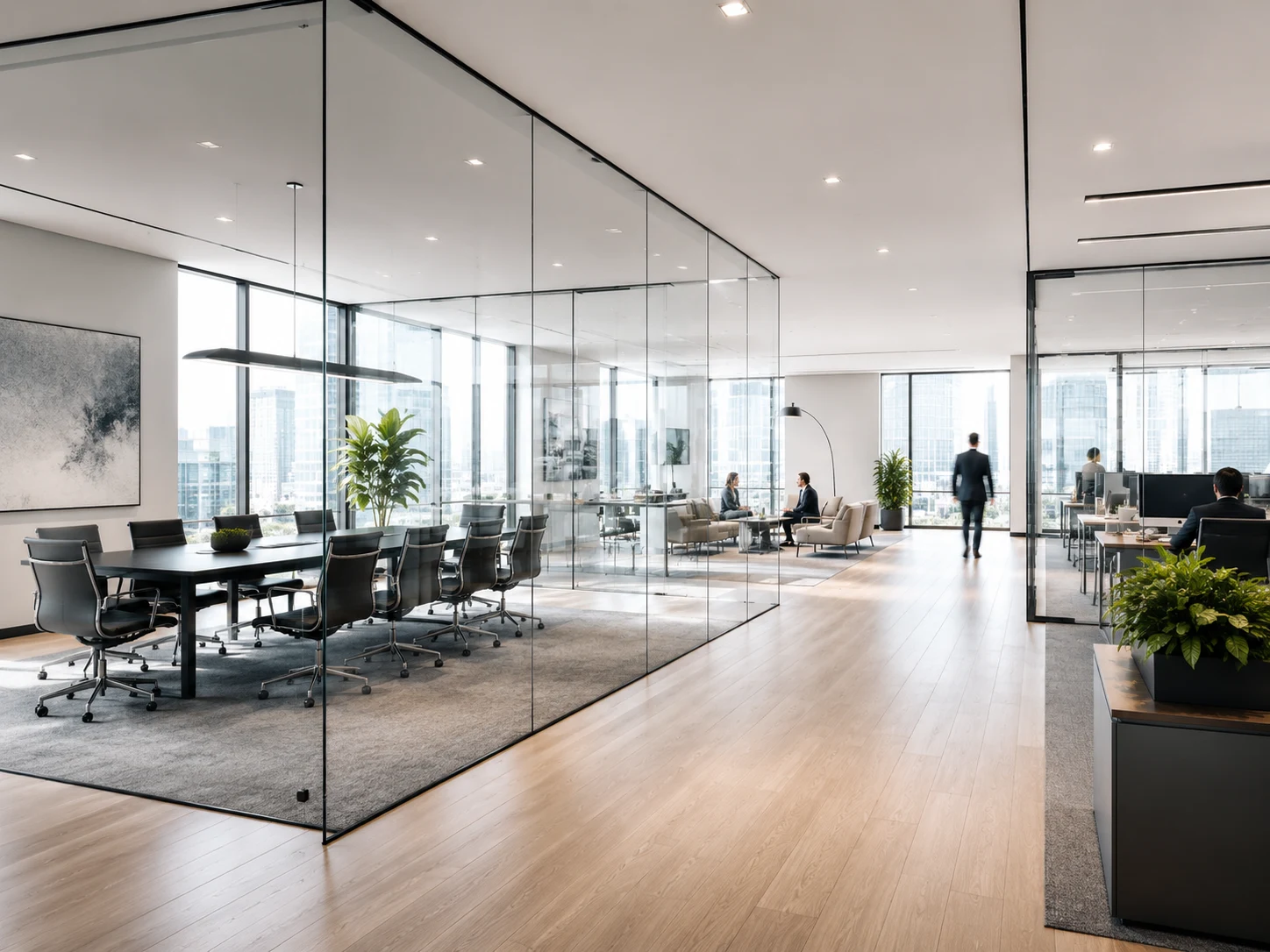
Modern commercial rooms now prefer open views over closed-off walls. Designers treat natural light as a core material rather than just a way to see. Frameless glass partitions make this work by keeping a clear view. At the same time, they mark out spots for meetings, deep work, or breaks. Since there are no bulky frames, the rooms look cleaner. This helps the whole office feel much bigger and more joined together.
How Frameless Glass Enhances Spatial Efficiency
Frameless systems get rid of thick aluminum or steel frames. These glass walls also keep the area open without losing sound control. Using laminated or treated glass can stop noise from moving between different work zones.
In modern offices where teams grow or shrink often, frameless partitions work well with movable desks and flexible layouts. Designers like how they can change these glass panels to fit new floor plans. This can be done without making huge structural changes to the building.
Types of Glass Used in Frameless Partition Systems
Different kinds of glass do different jobs.
Tempered Glass for Strength and Safety
Tempered glass is made using a process of high heat and fast cooling. This makes it many times stronger than standard float glass. If it does break, it crumbles into small, dull bits instead of sharp, dangerous pieces. This lowers the risk of injury. It is a vital feature for busy spots like showrooms, airports, or crowded offices.
Laminated Glass for Acoustic and Security Performance
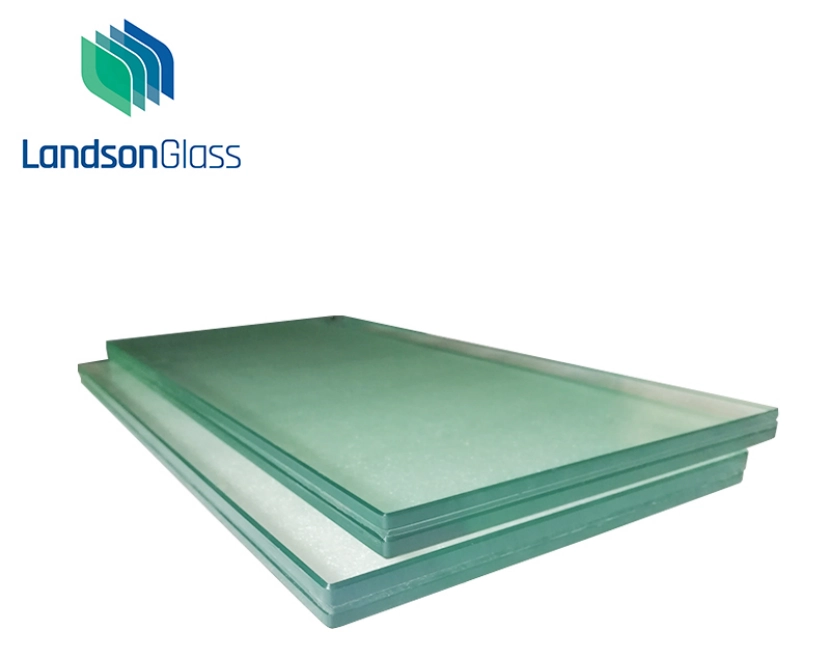
Laminated glass is built from two or more glass sheets. These pieces are glued together using strong interlayers. Common options for this process are PVB (polyvinyl butyral) or EVA (ethylene-vinyl acetate). These inner layers do a great job of blocking noise. They absorb sound waves easily. Therefore, the glass is a top choice for meeting rooms.
Low-Iron Glass for Clarity and Aesthetic Purity
Standard float glass often has a slight green tint. Low-iron glass removes this by using less iron during the making process. The result is a crystal-clear look that shows true colors. It offers a very high level of visual quality. Designers pick it for top-tier spaces like main lobbies or luxury stores where every small detail matters.
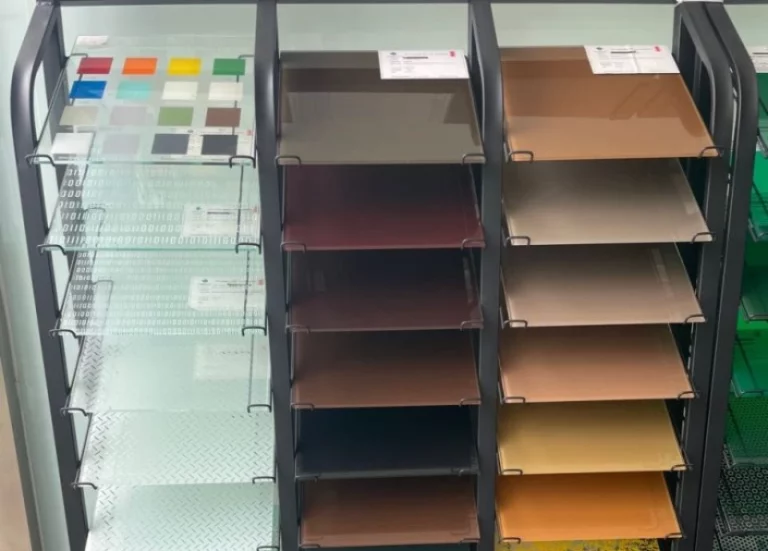
Frosted and Etched Glass for Privacy Control
Not every part of an office needs to be fully clear. Frosted or etched glass spreads light around while blocking a direct view. This is great for private desks or meeting rooms. These styles can also include logos or patterns using sandblasting. This turns a simple wall into a piece of art for the brand.
Technical Considerations in Frameless Glass Partition Design
How well a frameless system works depends on good engineering. This includes picking the right thickness and the best edge details.
Thickness Selection and Structural Stability
Glass thickness usually falls between 8mm and 12mm. The exact size depends on the panel height and specific load conditions. Taller setups need thicker glass. This extra material helps stop bending when the glass faces heavy stress or constant vibration. Engineers check every layout carefully. They compare these designs with local building codes. This process makes sure the project meets all necessary safety standards.
Edge Finishing and Joint Treatments
Glass edges are polished for more than just a good look. Polishing removes tiny cracks that might cause the glass to break later. Clear silicone or small gaskets are used to fill the gaps between the panels. This keeps the look of one long, continuous wall of glass. Precise cutting is used so that every piece of glass fits perfectly, even in very long hallways.
Functional Advantages of Frameless Glass Partitions in Commercial Interiors
Besides looking great, frameless partitions offer real perks for daily work.
Natural Light Optimization and Energy Efficiency
These systems let sunlight reach deep into the middle of a building. Because of this, offices do not need to use as many electric lights during the day. This helps save on energy bills and meets green building goals like LEED. Staff also feel better when they work in natural light. It is a small change that helps with their mood and health.
Acoustic Comfort in Open Office Environments
Open offices can be very noisy because voices travel so far. Laminated glass with sound-deadening layers helps fix this. It cuts down on noise moving between rooms while keeping the office bright. This allows teams to talk and work together while still having quiet spots for focused tasks.
Flexibility for Future Space Reconfiguration
Businesses change all the time. They grow, merge, or move to hybrid work. Being able to change the office layout quickly is a huge plus. Modular frameless systems are easy to move or resize. You do not have to tear down heavy walls. This makes office updates much cheaper than using drywall, which needs messy painting and plastering.
Design Trends Shaping the Use of Frameless Glass Partitions Globally
New tech is changing what glass can do in modern buildings:
- Switchable smart glass can change from clear to private with just a click of a button.
- Automated privacy control uses sensors to hide the view when people enter a room.
- Minimalist aesthetics focus on hidden joints and simple colors to match modern styles.
- Seamless transitions between areas create a high-end look for brands that want a classic style.
These trends show that frameless glass is no longer just a wall. It is now a smart part of the building that reacts to what the users need.
Architectural Glass Solutions at Landson Glass
Landson Glass uses its own tempering, laminating, and coating tech to keep quality high. We offer many choices for size, thickness, and color. You can also get frosted or decorative glass made for your specific project. Our products meet global standards like CE, SGCC, and IGCC. This means they are reliable for any market.
We provide engineering help from the start of the design until the glass is installed. This is for clients all over the world working on facades, doors, and windows. These skills help architects build complex designs quickly. We make sure everything meets high performance and safety rules, no matter the location or local laws.
FAQ
Q1: What is the main advantage of using frameless glass partitions in offices?
They make the office feel open and bright while still separating different work areas.
Q2: Are frameless glass walls safe?
Yes. When they are made from tempered or laminated safety glass, they are very strong and break safely if an accident happens.
Q3: Can frameless partitions provide acoustic privacy?
Yes. Laminated glass with special sound layers can block noise well while keeping the room clear.
Q4: How thick should commercial frameless partitions be?
Most are between 8mm and 12mm. The right size depends on how high the glass wall is.
Q5: What customization options are available?
You can choose different colors, frosted patterns, special coatings, or even smart glass that changes from clear to opaque.