

How to Choose Low-E Double Glazing for German Office Facades
For a German office facade, we’d choose Low-E double glazing by working backwards from the rooms. An exposed west room and a shaded north office won’t necessarily need the same glass. We’d settle winter insulation for the whole facade, then compare daylight and solar gain room by room.
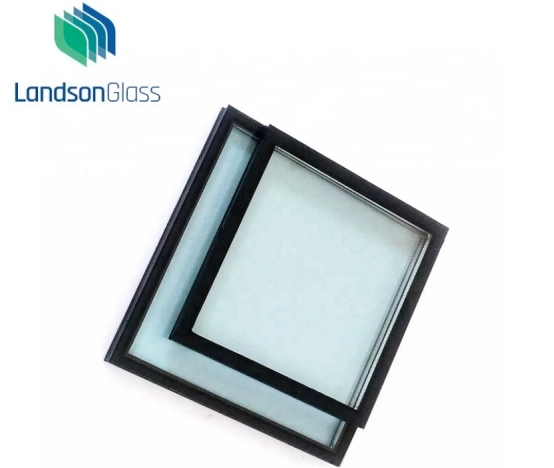
For the shortlisted Low-E insulated glass units, use an agreed pane build-up and calculation method. This is the point to catch a change in gas fill or cavity width, before it gets lost in a price comparison.
Which U-Value Should You Use for a German Office Facade?
Ask whoever prepared the quotation to identify what each thermal number covers. The small letters beside the U matter here. So does the method used to produce it.
Is the U-Value for the Glass or the Whole Facade?
Ug measures heat transfer through the glass unit. Lower means better insulation. Ucw describes the curtain wall assembly, including its framing and relevant edge effects. For a window, the whole-window figure is Uw. All three use W/(m²·K).
Suppose a shortlisted Low-E unit achieves Ug of 1.1 W/(m²·K). That’s achievable with double glazing, but we’d still want the facade designer’s Ucw calculation for the actual panel layout. Wider framing or smaller panels change the proportion of glass to frame. The designer needs that geometry to calculate the assembly and check it against the German project’s requirements.
There’s a useful decision to make here about double or triple glazing: which assembly actually reaches the thermal target? If the double-glazed option falls short, trying another coating may not be enough.
Compare Figures on the Same European Basis
For German specifications, request Ug calculated to DIN EN 673. Request solar and light properties to DIN EN 410 for the exact glass construction being quoted.
Check the method behind the glass performance figures. A winter U-value calculated under US conditions cannot simply be renamed Ug. The boundary conditions differ. Write the agreed method into the quotation, including any revised quotation after a glass substitution. A decimal place isn’t much use if the basis has changed underneath it.
What Does the Office Facade Orientation Change?
Consider a Frankfurt meeting room used at 4 pm. On a sunny west elevation, light can reach well across the table while people and equipment are already adding heat. The winter heat-loss figure won’t tell you how to deal with that.
With g = 0.30, 30% of the solar energy falling on the glazing enters as heat under the stated test conditions. Keep light transmission beside the g-value on the comparison sheet. Two glasses with similar solar control can leave you with different amounts of daylight.
| Office Elevation | What to Check Before Choosing the Coating |
| North | Preserve useful daylight, particularly where neighbouring buildings already shade the room. |
| South | Compare the glass together with external shading and its seasonal operation. |
| East and West | Check low-angle sun during occupied hours, including the glass below the reach of a roof overhang. |
Here is a numerical example for 100 m² of unshaded glass. Both options have the same Ug. Their g-values are 0.40 and 0.30, and the solar radiation falling on the glass is assumed to be 500 W/m²:
At g = 0.40: 100 m² × 500 W/m² × 0.40 = 20 kW.
At g = 0.30: 100 m² × 500 W/m² × 0.30 = 15 kW.
So the second option admits 5 kW less solar heat at that assumed moment. That is enough to deserve a look in the cooling calculation. To put an annual electricity saving against it, the modeller needs local weather and the hours the building is actually used.
We’d check daylight before choosing the lower g-value, particularly for desks further back from the facade. Someone sitting there may need the light that a colleague beside the window wants to shut out. Include the blinds in that review; solar-control glass alone won’t make direct sun on a monitor comfortable.
What Will the Low-E Glass Look Like at Desk Height?
Take the samples outside for approval. Upright, with daylight behind them, they give you a much better idea of the view than they do lying flat on a desk. Walk around to the other side as well. The reflection is what the street will see.
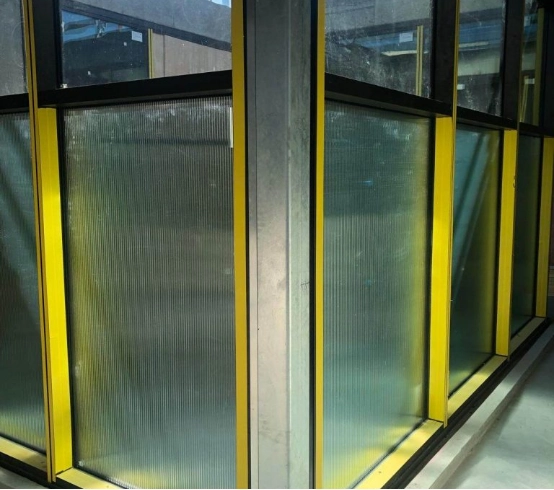
At a corner, the two elevations are in view together. Coatings that seemed close on separate samples may be less convincing here. Put the proposed spandrel finish beside the vision glass too. The opaque backing changes what the eye sees.
For the room-side review, include a monitor near the glazing and try the intended blind. Can people keep a view while using their screens? We’d be reluctant to approve a daylight-led design if the only comfortable setting were a fully closed blind.
Keep the sample that everyone signed off, with its full build-up attached. “Neutral grey” won’t be much help to the person ordering a replacement panel in a few years.
What Belongs in a Low-E Double Glazing Order?
Once a candidate works, get its construction onto the order. “Low-E, argon-filled” leaves several expensive decisions unfinished.
For the proposed Isolierglaseinheiten, pin down:
- Pane construction:Each pane needs a thickness and heat treatment on the drawing. The design check should address the applicable DIN 18008 requirements for its safety and support conditions.
- Coated face:Count the four surfaces from outdoors towards the room and mark where the coating goes. “Low-E inside” is too easy to misread.
- Cavity and gas:Put the cavity width beside the declared initial gas concentration. A larger gap doesn’t keep improving insulation indefinitely.
- Edge detail:Agree the spacer and seals with whoever is designing the facade. Structural glazing needs confirmation that the sealants are compatible with the system.
- Paperwork:Ask for the proposed unit’s relevant EN 1279 documents and applicable Declaration of Performance, alongside the European thermal and optical calculations.
Ask for the same information when a substitution is proposed. A matching overall thickness doesn’t establish matching solar performance. Nor does a similar-looking sample.
Ready to Compare Low-E Glazing for Your Facade?
At Landson Glass, we’d start with the elevation drawing and the room requirements. Send us your facade schedule with the project location and panel sizes. Include the target Ug or Ucw, plus g-value and light transmission. Add the shading arrangement and any safety or acoustic requirements.
If some targets are still open, identify them. It’s easier to compare two defined options now than to reopen the glass choice after the facade details are signed off.
FAQ (häufig gestellte Fragen)
Does a Triple-Silver Coating Mean Triple Glazing?
The word “triple” refers to different things here. A triple-silver unit may still have just two panes because the silver is within the coating. Order triple glazing and you’re adding a pane, with another cavity between the panes.
Can One Low-E Coating Cover Every Elevation?
It can, and visual matching becomes simpler. We’d want to see the daylight result for the shaded rooms before making that call. The coating that suits an exposed west room may be an unnecessary compromise on the north.
Will Low-E Double Glazing Block Traffic Noise?
The Low-E coating isn’t the part to select for traffic noise. That choice rests on the pane construction and sound test evidence. An acoustic laminate belongs in that discussion, together with the seals in the intended assembly.
Will Warm-Edge Spacers Prevent All Condensation?
A warmer glass edge helps. We’d still ask about room humidity and look for a cold junction in the frame. Someone working beside that window needs the whole detail to work through winter, not just the spacer.