
Das Wissen, wie Wärmeeinweichungsprüfungen gehärtetes Glas schützen, ist wichtig für Menschen, die an Bauprojekten arbeiten. Die Methode mag kompliziert erscheinen. Aber sein Ziel ist einfach. Es stellt sicher, dass jedes Glasblatt, das auf Gebäudefronten, Geländer oder Dachfenster platziert wird, viele Jahre lang sicher und stabil bleibt.
Heat Soak Test für gehärtetes Glas
Bevor man sich in den Prozess selbst eintaucht, lohnt es sich, zu klären, was Wärmeeinweichung eigentlich bedeutet und warum sie eine so entscheidende Rolle in der Glasherstellung spielt.
Was heißen Soak Testing bedeutet
Heat-soak-Testing ist ein verwalteter Schritt, der auf gehärteten oder gehärtetes GlasDies kommt, nachdem das Glas durch Hitze stärker gemacht wurde. Während des Tests erhitzen sie das Glas in einem Raum auf einen bestimmten Wärmegrad. Normalerweise’ ca. 290°C. Sie halten es dort für ein paar Stunden. Diese Aktion beschleunigt mögliche Veränderungen von Nickelsulfideinschlüssen. Das sind kleine Stücke Schmutz, die mit der Zeit größer werden können. Und sie könnten plötzlichen Bruch verursachen.
Der Hauptzweck der Wärmeeinweichungsprüfung ist es, die Wahrscheinlichkeit von Überraschungspausen zu verringern, nachdem das Glas in Gebäude eintritt. Es dient als letzte Qualitätsprüfung im gesamten Herstellungsprozess. Es kommt direkt nach dem Temperieren. Und es geschieht vor dem Verpacken oder dem Hinzufügen von Schichten.
Landson Glass produziert wärmebehandeltes Glas für Kunden, die nach australischen, neuseeländischen und europäischen Normen hochwertiges gehärtetes Glas verlangen. Diese Verpflichtung stellt sicher, dass jedes Stück strenge Verarbeitungsschritte durchläuft, einschließlich optionaler Wärmeeinweichung, bevor es Kunden weltweit erreicht.
Warum gehärtetes Glas eine Hitze-Soak-Prüfung erfordert
Gehärtetes Glas bekommt seine Kraft durch schnelle Heizung und Kühlung. Doch auch gute Gruppen davon können winzige Nickelsulfid (NiS) Einschlüsse haben. Diese stammen aus den Grundstoffen. Wenn sie sich mit wechselnder Hitze konfrontieren - meist draußen - können diese Bits schnell schwellen. Das schafft Druck im Inneren. Und das führt zu einem plötzlichen Bruch.
Wärmeeinweichungstests kopieren lange Zeiträume von Wetteränderungen in nur wenigen Stunden. Es hält hohe Wärme im Ofenraum. Also brechen schlechte Platten mit schüttelnden Einschlüssen während des Tests. Nicht nachdem sie aufgestellt wurden. Diese vorausschauende Art und Weise entfernt schwache Stücke bald. Daher erreichen nur feste Platten die Arbeitsplätze.
Der Prozess hinter Heat Soak Testing
Nachdem man seine Notwendigkeit verstanden hat, ist es hilfreich, sich anzusehen, wie Hersteller diesen Test Schritt für Schritt durchführen.
Schritt-für-Schritt-Überblick über das Heat Soak-Verfahren
Der Prozess folgt in der Regel drei Hauptphasen:
| Bühne | Beschreibung | Temperatur / Dauer |
| Heizung | Glasplatten werden in einem speziell entwickelten Ofen platziert und allmählich erhitzt | Bis zu 290°C |
| Holding | Die Temperatur wird für mehrere Stunden gehalten, um Schwächen zu entlarven | Typischerweise 2-4 Stunden |
| Kühlung & Inspektion | Panels werden vor visuellen Kontrollen und Verpackung langsam abgekühlt | Kontrollierte Kühlung |
Diese Sequenz stellt sicher, dass alle Platten mit instabilen Einschlüssen im Ofen brechen, anstatt später auf einer Baustelle. Nach Abkühlung prüfen die Techniker die verbleibenden Platten auf Oberflächenintegrität und optische Qualität, bevor sie für den Versand genehmigt werden.
Ausrüstung und Normen für die Prüfung
Hersteller setzen auf präzisionsgesteuerte Öfen mit mehreren Sensoren, die die Lufttemperaturgleichmäßigkeit in allen Abschnitten überwachen. Konsistenz ist der Schlüssel; Ungleichmäßige Heizung könnte bestimmte Bereiche ungeprüft lassen.
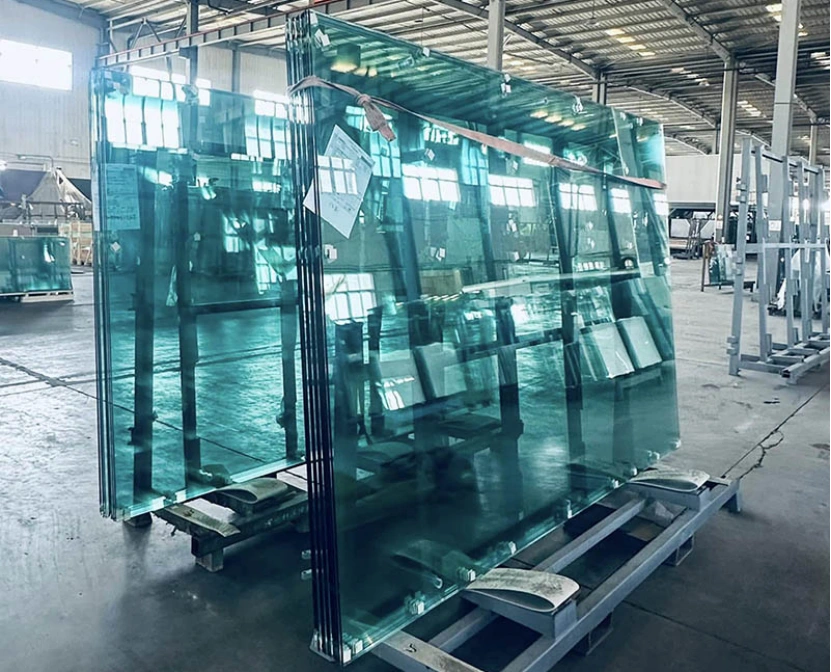
International anerkannte Normen wie EN 14179 (Europa) und ASTM C1048 (USA) definieren detaillierte Anforderungen an Temperaturzyklen, Dauer und Berichtsverfahren. Die Herstellung von hochwertigem, sehr flachem gehärtetem Glas ist entscheidend und Landson Glass ist sehr gefragt, um sein gehärtetes Sicherheitsglas zu liefern.
Vorteile von Heat Soak getestetem gehärtetem Glas in Architekturprojekten
Für Architekten und Auftragnehmer, die an hohen Fassaden oder öffentlichen Infrastrukturen arbeiten, ist Sicherheit nicht optional – sie ist obligatorisch. Hitze getränktes gehärtetes Glas bietet konkrete Vorteile jenseits der Compliance-Dokumentation.
Verbesserte Sicherheit und Zuverlässigkeit
Bei Verwendung in Vorhangwänden oder Balustraden in Höhe stellt ein spontaner Bruch schwere Gefahren nicht nur für das Eigentum, sondern auch für die öffentliche Sicherheit dar. Wärmegetränkte Platten reduzieren dieses Risiko drastisch, indem sie defekte Einheiten im Voraus ausfiltern. Folglich:
- Die strukturelle Zuverlässigkeit verbessert sich auf großen verglasten Flächen.
- Wartungsteams haben weniger Ersatzbedarf.
- Langfristig steigt das Vertrauen der Beteiligten.
Einhaltung der Bauvorschriften und Projektspezifikationen
Viele moderne architektonische Projekte erfordern unter ihren technischen Spezifikationen ausdrücklich zertifiziertes Hitzeprüfteglas. Die Erfüllung der EN 14179 oder gleichwertigen Normen gewährleistet, dass jedes Panel unter kontrollierten Bedingungen eine ordnungsgemäße Bewertung durchgeführt hat. Für öffentliche Gebäude oder Verkehrsknotenpunkte, in denen die Sicherheit der Menschenmenge am wichtigsten ist, hilft die Compliance Projektmanagern bei Audits oder Versicherungsbewertungen Due Diligence zu beweisen.
Wichtige Überlegungen für Käufer bei der Bestellung von Heat Soak Tested Glas
Der Übergang von der Designabsicht zur Beschaffung erfordert eine sorgfältige Lieferantenauswahl. Käufer sollten nicht nur die Preisgestaltung bewerten, sondern auch die Konsistenz der Testprotokolle.
Die Wahl des richtigen Lieferanten für Architekturprojekte
Die Zusammenarbeit mit einem erfahrenen Hersteller sorgt für eine Rückverfolgbarkeit während der gesamten Produktion. Landson Glas produziert andere spezielle Verarbeitungsprodukte mit Wasserstrahlen, Bohrmaschinen, Intermac CNC-Bearbeitungsmaschine, geformte Kantenmaschine, runde Ecken, geformte Kanten usw. Unsere integrierte Anlage ermöglicht Polieren, Bohren, Wasserstrahlschneiden, CNC-Formgebung - alles unter einem Dach - und minimiert Handhabungsfehler zwischen den Prozessen.
Käufer sollten:
- Nachweis der Einhaltung der EN 14179.
- Probe-Testberichte aus jüngsten Produktionsläufen.
- Details zu den Ofenkalibrierungsintervallen.
- Qualitätskontrolldokumentation über Kontrollstellen.
Ausgleich zwischen Kosten, Lieferzeit und Qualitätssicherung
Während die Wärmedämpfungsprüfung die Kosten erhöht und die Lieferzeit leicht verlängert (in der Regel 2-3 Wochen ab Werk), verringert sie die langfristigen Risiken, die mit einem Bruch nach der Installation oder Garantieansprüchen verbunden sind, erheblich. Ex-Factory zeigt realistische Planungserwartungen bei der Planung von Lieferungen für großflächige Vorhangwandprojekte an.
Investitionen im Voraus in getestetes Glas verhindern später teure Standortstörungen – eine wichtige Überlegung bei der Koordination mehrerer Subunternehmer auf engen Bauzeitplänen.
Anwendungen von Heat Soak getestetem gehärtetem Glas in der modernen Architektur
Von Wolkenkratzern bis hin zu Wohngebäuden findet härtetes Glas Anwendungen, wo Langlebigkeit auf Designtransparenz trifft.
Vorhangwände und Fassaden
Diese Anlagen stehen täglich Windbelastungen und thermischer Ausdehnung gegenüber. Die Verwendung von wärmegetrennten Platten gewährleistet die Sicherheit vor unvorhersehbaren Brüchen in der Höhe und bewahrt gleichzeitig die ästhetische Klarheit über weite Oberflächen.
Glasbalustraden und Geländer
Balustraden erleben oft mechanische Belastung in Kombination mit Umweltbelastung wie Regen oder UV-Strahlung. Geprüftes gehärtetes Glas behält die strukturelle Leistung im Laufe der Zeit, ohne die visuelle Attraktivität zu beeinträchtigen.
Dachlichten, Dachboden und Dachverglasung
Überkopfverglasung erfordert zusätzliche Vorsicht, da fallende Fragmente Menschen unterhalb gefährden könnten. Wärmeeinweichung getestete Panels erhöhen Sie die Sicherheit, indem Sie die Stabilität unter längerer Sonneneinstrahlung oder schwankenden Außentemperaturen bestätigen.
Wie Landson Glass Käufer mit zertifizierten, auf Hitze getrennten Produkten unterstützt
Unter den globalen Lieferanten, die Architekturmärkte im Ausland bedienen, zeichnet sich Landson Glass durch integrierte Fertigungskapazitäten aus, die durch internationale Zertifizierungen unterstützt werden.
Der Qualitätssicherungsansatz von Landson
Unsere Produktionslinien verbinden Automatisierung mit erfahrener Handwerkskunst, die auf komplexe architektonische Entwürfe wie übergroße gebogene Platten oder solche mit Löchern für Armaturen zugeschnitten sind. Und kann mit Wärme getränkt, Wärme verstärkt oder gekrümmt Option sein. Jede Stufe - vom Temperieren bis zur Endprüfung - folgt strengen internen Protokollen, die den Normen EN 14179 entsprechen.
Jede Charge wird nach der Abkühlung mehreren visuellen Kontrollen unterzogen, um die optische Ebenheit und die Kantenpräzision zu bestätigen, bevor sie in Holzkisten verpackt wird, die nach Kundenanforderungen entwickelt wurden.
Mehrwertdienstleistungen für internationale Käufer
Neben den Standardproduktionsangeboten:
- Kundenspezifische Größe Fertigung bis zu 3210 × 5100 mm.
- Optionale Beschichtungen wie Low-E oder Acid Etch.
- Technische Beratung zur Anpassung von Produkten an regionale Bauvorschriften.
- Exportwertige Verpackungen, die den sicheren Transit weltweit gewährleisten.
Verpackung Holz Endkappen oder Kisten können nach den Anforderungen der Kunden gemacht werden. Mit der bereits auf Kontinenten übergreifenden globalen Logistikunterstützung erhalten ausländische Käufer unabhängig vom Zielhafen eine konsistente Qualität.
Häufig gestellte Fragen
Q1: Welche Temperatur wird während der Hitze-Einweichen-Prüfung verwendet?
Typischerweise bei ca. 290°C mehrere Stunden nach EN gehalten 14179 Leitlinien.
Q2: Benötigt alle gehärtete Glas Hitze Einweichen Test?
Nicht immer; Es wird jedoch dringend für den Außenbereich der Architektur empfohlen, wo die Sicherheitsrisiken höher sind.
Q3: Wie lange dauert der gesamte Prozess?
Inklusive Heizung, Einweichen, Kühlung und Inspektion – in der Regel innerhalb eines Tages pro Charge plus logistische Handhabungszeit.
Q4: Kann gekrümmtes oder geformtes gehärtetes Glas Hitze getränkt werden?
Ja; Hersteller wie Landson Glass bieten gekrümmte oder gebohrte Optionen, die denselben kontrollierten Prüfzyklus durchlaufen.
Q5: Warum verursacht Nickelsulfid spontanen Bruch?
Denn NiS-Einschlüsse erweitern sich, wenn sie Temperaturänderungen im Laufe der Zeit ausgesetzt sind, was innere Belastungen verursacht, die gehärtetes Glas unerwartet brechen.