

Introduction: Why Glass Clarity Matters in Premium Architecture
Glass does more than close an opening in a premium building. It carries daylight into the plan and frames a city view. A slight green cast can change the result.
Standard clear glass often shows this tint, especially in thick panels and along exposed edges. Ultra-clear glass, also called low-iron glass, reduces that color shift. The difference can look subtle on a small sample. Across a large façade, it is not. The neutral appearance becomes part of the architecture.
1. What Is Ultra-Clear Glass?
Ultra-clear glass is made with less iron than ordinary clear float glass. Iron in the raw material produces the familiar green tone. Reduce the iron, and the glass transmits a cleaner view.
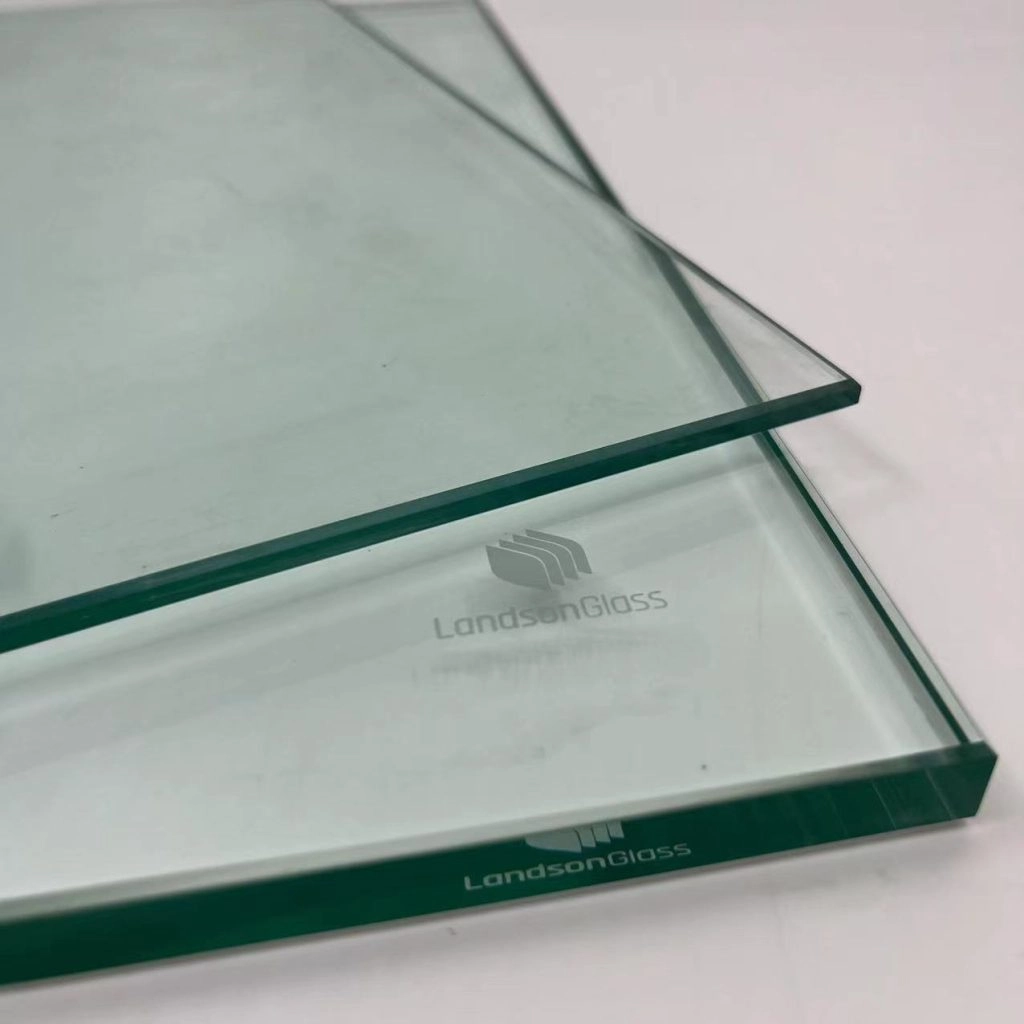
The comparison is easy to see in a thick edge. Standard glass can look distinctly green. Low-iron glass stays much closer to clear. Visible light transmission is also higher, though the exact result depends on thickness, coatings, and the finished glazing build-up.
Ultra-clear glass is a base material, not a single finished product. It can be processed as vidrio templado, laminated glass, coated glass, or an insulating glass unit. Optical quality has to work alongside safety, thermal performance, fabrication limits, and the façade system.
2. Superior Transparency and Color Fidelity
Color accuracy is a strong reason to specify low-iron glass. A white stone wall should look white through the façade. A bronze panel should not pick up a green filter. In a museum or luxury residence, this affects how the space is judged.
The benefit is clear in large panes or visible edges. Think of a frameless lobby screen beside pale marble. With ordinary glass, the edge may read as a green stripe. A low-iron option keeps the junction quieter. The principle applies to fins, balustrades, structural glazing, and thick laminated assemblies.
Architects can approve samples with greater confidence because the glass is less likely to shift adjacent finishes. For a façade consultant, that removes one variable from a mock-up review. Consistent color is easier for a distributor to explain to a buyer.
3. Maximizing Daylight and the Sense of Space
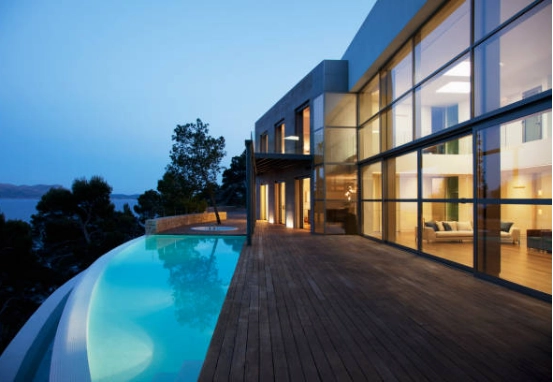
High light transmission can make a deep interior feel less enclosed. In a hotel atrium, daylight reaches farther across the floor. In a villa, a large window keeps a garden view clear. Skylights and glass roofs gain the same advantage.
This does not mean ultra-clear glass guarantees lower energy use. The complete assembly controls that outcome. Thickness, solar-control coating, cavity, frame, orientation, shading, and climate all matter. A low-iron pane may improve daylight transmission while a suitable coating manages solar heat gain.
Review that trade-off early. Changing glass late can affect color, coating selection, heat treatment, edge clearance, and adjacent panels. A sample review during specification is cheaper than a façade correction after installation.
4. Design Freedom for High-End Architectural Projects
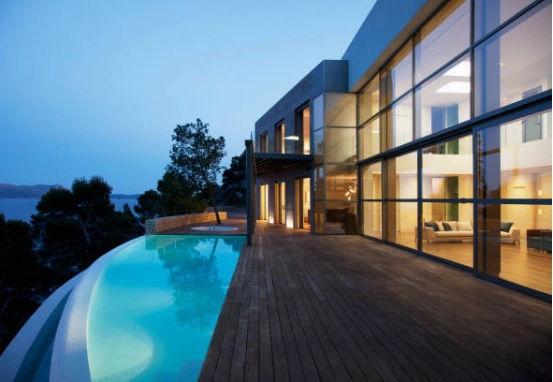
Neutral glass gives a restrained design concept more room to breathe. It suits a minimalist curtain wall and warmer settings such as a timber-lined villa or a bronze-detailed hotel lobby. The glass does not force a strong color onto the palette.
Designers can combine it with ceramic frit, screen printing, colored interlayers, reflective coatings, or other decorative treatments. It can be shaped for special openings and assembled into insulated units. A retail flagship might use a clear display wall with printed privacy zones. A cultural building might need a neutral pane around an interior installation.
Approve the finished combination. A low-iron substrate does not make every coating or interlayer colorless. Printed patterns, sealants, edge processing, and reflections still influence the view.
5. Safety, Strength, and Functional Performance Through Processing
Ultra-clear glass is not automatically safety glass. Its safety and structural performance come from the processing and the design of the glazing system.
Tempering increases resistance to mechanical and thermal stress. Heat strengthening may suit different breakage requirements. Lamination keeps broken fragments attached to an interlayer, which matters for overhead glazing, balustrades, and entrance systems. Insulating glass units can add thermal and acoustic performance when designed correctly.
A large façade panel may look simple on a drawing. The engineering is not. Wind load, impact, thermal stress, span, support conditions, edge quality, and local codes influence the make-up. A project may need a tempered laminated unit rather than a single pane or a coated insulating unit with a specific cavity.
For that reason, the glass schedule should include more than a color description. Confirm thickness, treatment, dimensions, tolerances, edgework, tests, and packaging before production. Landson Glass also supplies unidades de vidrio aislado and vidrio laminado for projects where optical clarity has to sit within a broader performance specification.
6. Where Ultra-Clear Glass Is Commonly Used
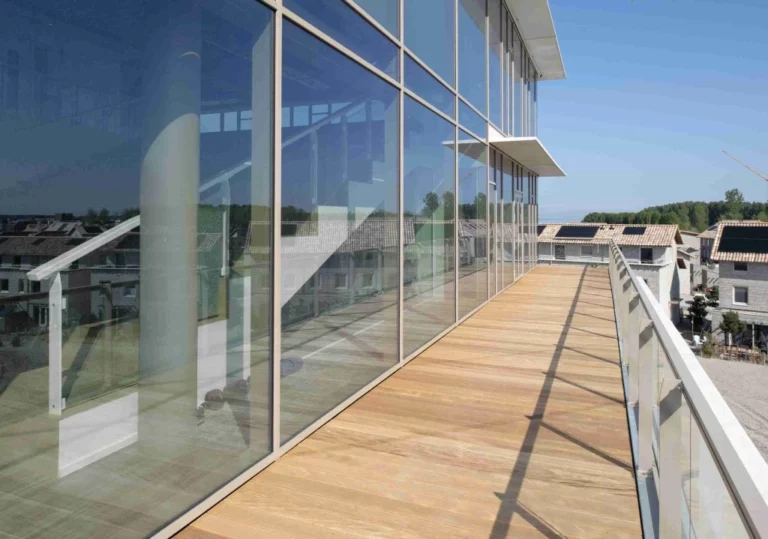
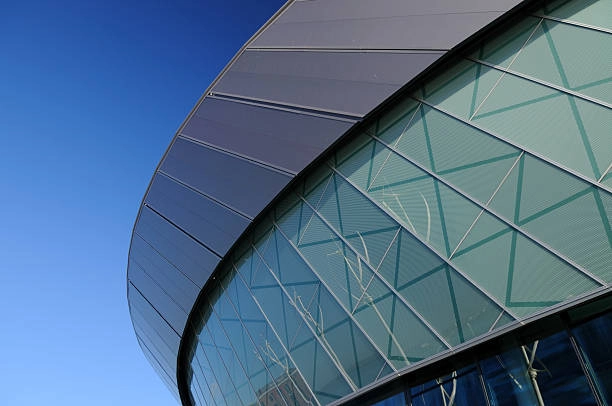
Commercial façades use ultra-clear glass when transparency and a controlled street presence matter. Entrances and showrooms benefit from accurate product colors. Offices use it in curtain walls, atriums, and feature glazing.
In luxury residential work, it is common in panoramic windows, sliding doors, balconies, and interior partitions. A green edge is more noticeable in a quiet room.
Hospitality projects use it in lobbies, villas, restaurants, and spa areas. Museums and galleries specify it where artwork must be seen without an obvious color cast. It also appears in skylights, bridges, stairs, and display cases. Each application needs a safety and load review.
7. How to Select the Right Ultra-Clear Glass Supplier
Start with project constraints, not only appearance. Confirm the base glass, thickness range, maximum size, and optical expectations. Ask how color consistency is checked across batches. A façade mock-up is better when edge appearance or a special coating matters.
Processing capability matters just as much. Check whether the supplier can handle tempering, lamination, drilling, shaping, printing, coating, and insulating glass assembly under one order. Review tolerances, export packaging, lead time, and replacement procedures. Documents should match the quoted make-up.
For overseas projects, communication is part of quality control. Send dimensions, thickness, processing sequence, quantity, destination, and applicable standards in one request. Landson Glass provides a direct contact and quotation route. A short technical exchange can identify a coating conflict or size limit before the purchase order.
Preguntas frecuentes
Is ultra-clear glass the same as low-iron glass?
Yes. Ultra-clear glass is the common architectural term for low-iron glass with improved optical neutrality and reduced green tint.
Can ultra-clear glass be tempered or laminated?
Yes. It can be processed into tempered or laminated glass when the thickness, dimensions, edge condition, and project requirements are suitable.
Is ultra-clear glass suitable for curtain walls?
It can be used in curtain wall systems when the complete glazing build-up meets structural, thermal, safety, and local code requirements.
Conclusión
For high-end architecture, ultra-clear glass offers a cleaner view, more faithful colors, and greater control over the visual character of a space. Its real value appears when those optical benefits are coordinated with safety processing and façade performance.
Planning a façade, skylight, balustrade, or premium interior project? Send Landson Glass the required dimensions, thickness, processing method, quantity, and destination to discuss a suitable configuration and request a project quotation.