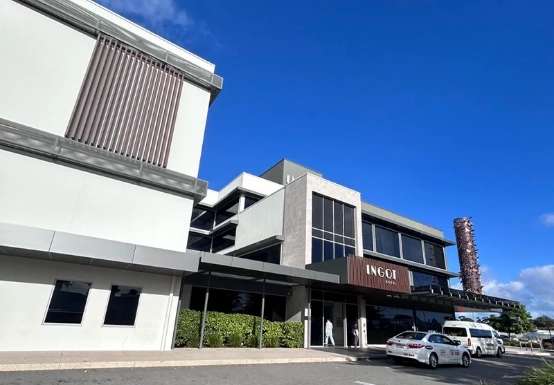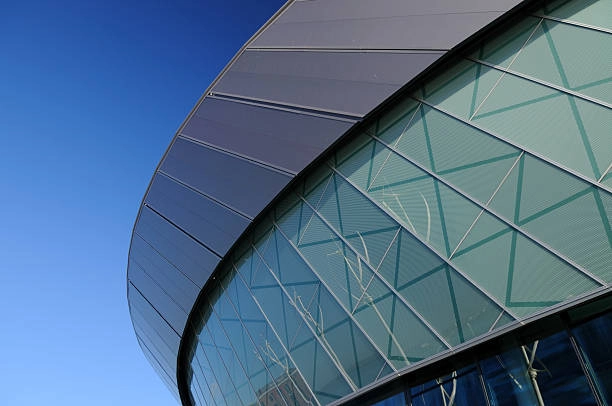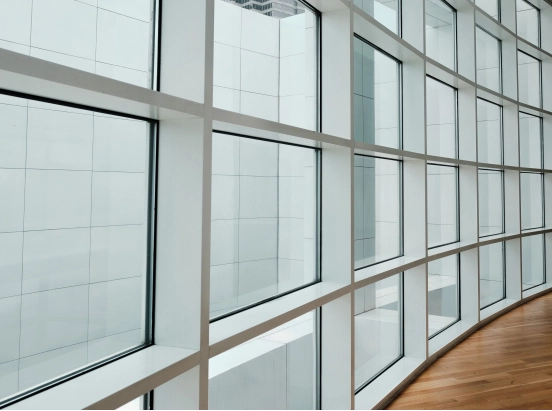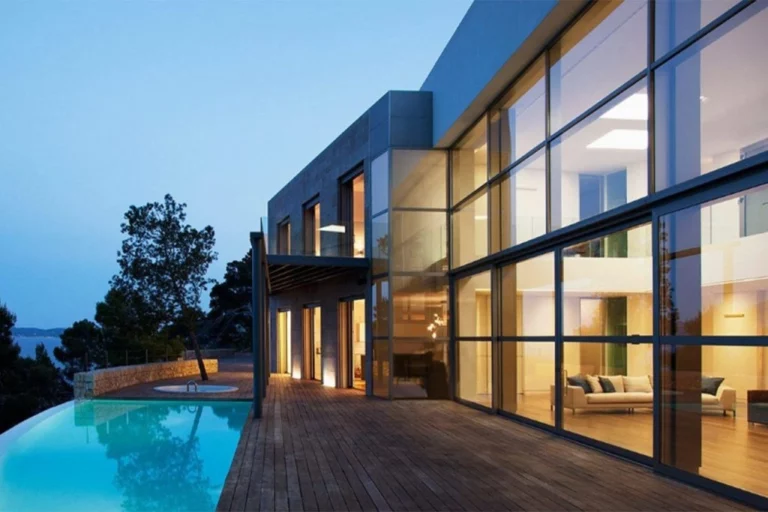

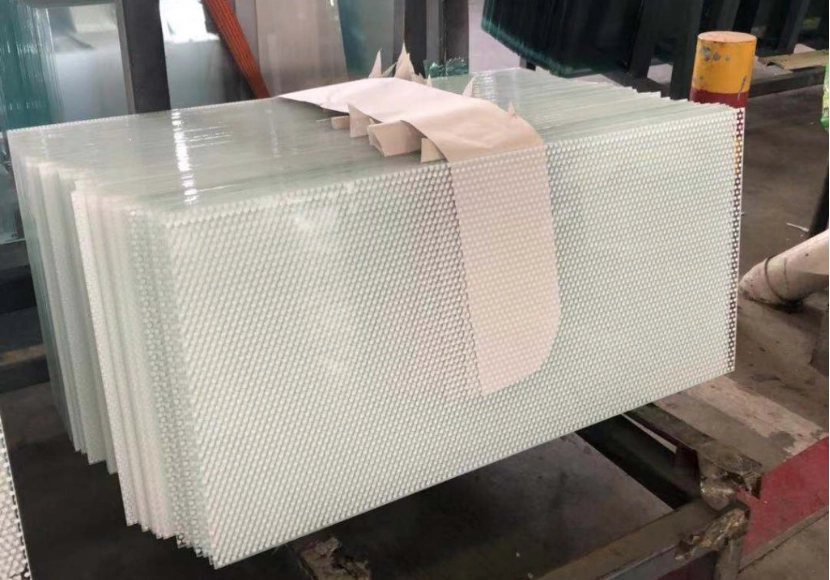
Bird-safe facade glass should be specified as part of the building envelope, not added as a decorative correction after design approval. The pattern on the glass has a job. It must interrupt reflection, break up transparency, and still work with the architect’s visual intent.
Fritted glass and printed patterns are practical options for this. They are durable, flexible, and familiar to facade contractors. When designed properly, they help birds read the glass as a barrier without turning the building into a closed wall.
Why Do Modern Glass Facades Create Bird Collision Risks?
Modern glass facades are often designed to look clean and almost invisible. That is where the risk starts.
Birds may see reflected trees, sky, water, or landscape on the glass surface. In some cases, they see vegetation through the building, especially around transparent corners, atriums, glass bridges, and lobby walls. To a bird in flight, that can look like open space.
How Do Fritted Glass and Printed Patterns Help Make Glass Bird-Safe?
Bird-safe printed glass works by making the glass visible before impact. The pattern gives birds a visual cue that the opening is not open. Simple idea. Harder in real projects, because the facade still needs daylight, views, thermal performance, and a clean appearance.
Fritted and printed glass patterns can be designed as dots, lines, bands, gradients, or custom graphics. The key is not decoration alone. The pattern must be visible enough and close enough to break up the perceived flight path.
What Is Fritted Glass?
Fritted glass uses ceramic ink applied to the glass surface before heat treatment. During tempering or heat strengthening, the ceramic frit bonds to the glass. That makes it more durable than applied surface films for many new-build facade projects.
Typical frit patterns include dots, stripes, borders, gradients, and geometric layouts. Dot frit is especially common because it is easy to control on drawings and repeat across many panels.
Frit can also support glare reduction, solar shading, and privacy. A meeting room with a soft dot frit may still receive daylight, but the glass feels less exposed. On the outside, the same pattern helps reduce the “invisible wall” effect.
What Are Printed Glass Patterns?
Printed glass patterns may be screen printed or digitally printed. Screen printing is useful for repeated panels and consistent production. Digital printing allows more complex graphics, gradients, images, and project-specific designs.
Design freedom is useful, but it can be misleading. A pale grey custom pattern may look elegant in a rendering and almost disappear on a bright reflective facade. That may satisfy the design board, but it may not help birds much.
Good printed patterns usually have:
- Clear contrast
- Controlled spacing
- Repeatable layout
- Durable ink system
- Coordination with panel size and mullions
A printed pattern should be judged on the building, not only on a small sample.
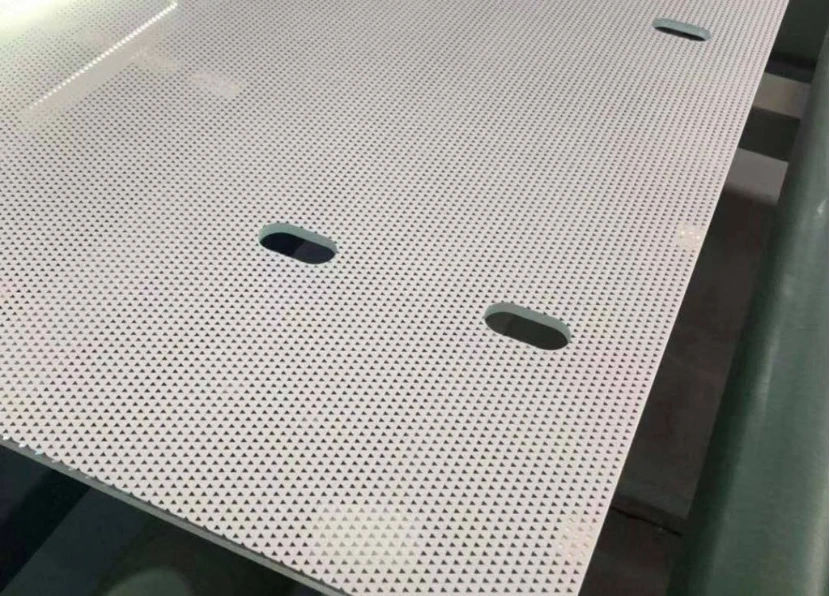
What Pattern Rules Should Be Considered for Bird-Safe Facades?
Spacing is one of the most important details. The pattern also needs contrast.
A practical checklist:
- Keep gaps between markers small
- Use visible contrast from the exterior
- Avoid overly subtle colors
- Review the pattern under different light conditions
- Check local bird-safe requirements
- Confirm whether tested products or consultant approval are required
Exterior-facing visibility is usually important because birds encounter the outside surface first. Still, glass build-up, coating location, lamination, IGU design, and cleaning requirements must be reviewed before production.
Which Printed Pattern Types Work Best for Building Facades?
Different patterns suit different facade conditions. There is no single best pattern for every project.
| Pattern Type | Best For | Advantages | Design Considerations |
| Dot frit patterns | Curtain walls, atriums, office facades | Clean look, easy spacing control | Dot size and spacing must remain visible |
| Line patterns | Schools, transport buildings, commercial facades | Strong visual cue, simple layout | Large gaps should be avoided |
| Gradient frit | Privacy zones, solar control areas | Softer appearance | Sparse areas may be less effective |
| Custom digital print | Landmark projects, branded facades | High design freedom | Artwork still needs bird-safe spacing |
| Semi-opaque bands | Balustrades, spandrel, privacy glass | Strong visibility | Reduces transparency |
For large commercial facades, dot frit is often the most buildable choice. It is easy to specify, easy to inspect, and easy to repeat. Custom digital print works well when the architect wants a stronger identity, but it needs tighter coordination.
How Can Bird-Safe Printed Glass Balance Safety, Aesthetics, and Performance?
Bird-safe glass does not need to look like a warning label. A controlled pattern can give the facade texture, depth, and scale.
From inside, a light frit may reduce glare without blocking the view completely. In hotels, schools, hospitals, and offices, it can also create a more comfortable sense of privacy. On sunny elevations, fritted areas may help reduce harsh light near workspaces or circulation zones.
What Should Buyers Specify When Ordering Fritted or Printed Bird-Safe Glass?
A buyer should not ask only for “bird-friendly glass.” That phrase is too loose for production. The supplier needs clear requirements.
Pattern and Visibility Requirements
The pattern should be defined before pricing and sampling. Important details include:
- Pattern type
- Dot or line size
- Spacing
- Coverage percentage
- Ink color
- Surface position
- Exterior visibility requirement
- Mock-up approval method
Small differences matter. A wider gap between dots can change both appearance and performance.
Glass Configuration
The printed pattern must match the glass build-up. Project teams should confirm whether the glass is:
- Tempered
- Heat-strengthened
- Laminated
- Insulated
- Low-E coated
- Solar control glass
- Oversized or shaped
In IGUs and laminated units, print position affects durability, appearance, coating compatibility, and cleaning. It should not be decided casually.
Project Documentation
Good documentation prevents expensive mistakes. For export projects, labeling and packing deserve attention. A correct pattern on the wrong elevation is still a problem.
Why Choose a Custom Architectural Glass Supplier for Bird-Safe Facade Projects?
Bird-safe facade glass is a coordination task. It involves design review, glass processing, heat treatment, printing, lamination or IGU assembly, inspection, packing, and shipping.
A custom supplier such as Landson Glass is suitable for this kind of B2B project because the glass often needs more than one process. A facade may require ceramic fritted glass for repeated curtain wall panels, digital printed glass for feature areas, laminated safety glass for public zones, and insulated glass units for thermal performance.
Consistency is important. On a full elevation, pattern variation between batches is visible. So are color shifts, alignment errors, and wrong print orientation.
Conclusion: Fritted and Printed Glass Make Bird-Safe Facades More Buildable
Fritted glass and printed patterns give project teams a practical way to reduce bird collision risk without abandoning glass facade design. The important part is discipline: visible spacing, suitable contrast, correct glass build-up, and consistent production. When these details are handled early, bird-safe glass becomes a normal facade specification, not a late-stage compromise.
FAQ
Q: Is fritted glass better than film for bird-safe facades?
For new construction, fritted glass is usually more durable. Ceramic frit bonds to the glass during heat treatment, while films are more common for retrofit work.
Q: Can bird-safe glass still look transparent?
Yes, but it cannot be invisible. The pattern must remain visible enough for birds to detect the glass surface.
Q: Does every printed glass pattern qualify as bird-safe?
No. Decorative printing is not automatically bird-safe. Spacing, contrast, coverage, and exterior visibility all need review.
Q: Can fritted glass be used in IGUs?
Yes. Fritted or printed glass can be combined with insulated glass units, but print location and coating compatibility should be confirmed before production.