

Roller wave, overall bow, and anisotropy are three different quality characteristics in heat-treated architectural glass. Roller wave is periodic surface distortion, bow is curvature across the whole lite, and anisotropy is a stress-related optical pattern. A useful specification therefore defines how each relevant characteristic will be measured and accepted instead of asking only for “flat” or “distortion-free” glass.
How to Read Roller Wave, Bow, and Anisotropy
Heat strengthening and tempering improve the mechanical and thermal performance of glass, but heating a lite near its softening range and rapidly cooling it can affect its shape and stress distribution. These effects matter most where large, reflective, coated, or repeated panels must present a uniform facade.
The correct question is not whether heat-treated glass is optically identical to annealed glass. It is whether the supplied glass meets the applicable standard, the project-specific limits, and the appearance approved in a representative mock-up. Buyers reviewing heat-treated tempered glass options should address visual quality while the glass build-up and processing route are still being selected.
Roller Wave and Overall Bow Are Different Flatness Problems
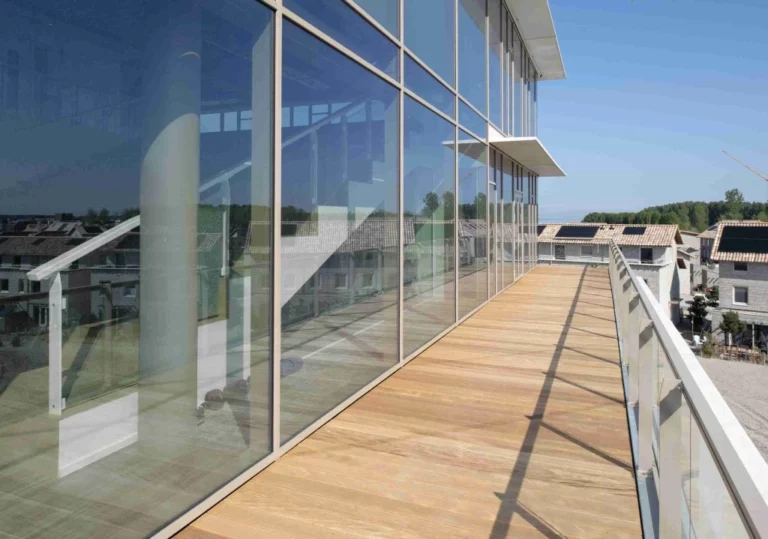
In a horizontal tempering furnace, softened glass travels over ceramic rollers. Small sags between successive rollers can leave a repeating wave. This roller wave is local: its peaks and valleys repeat across the lite, and the visible effect is often a rippled reflection when viewed at an angle. Its direction follows the furnace roller orientation.
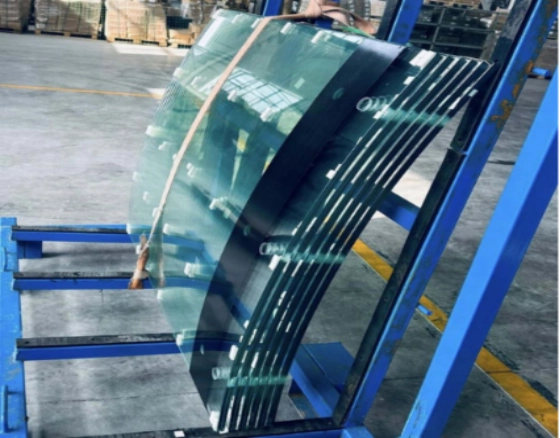
Overall bow is larger-scale curvature across the full glass dimension. A lite can meet a roller-wave limit yet still have excessive bow, or have acceptable bow while showing objectionable local reflection distortion. The two must be checked separately.
| Characteristic | What It Describes | Typical Visual Signal | Useful Assessment | What to Specify |
|---|---|---|---|---|
| Roller wave | Repeating local surface undulation | Wavy reflected lines or repeated optical bands | Peak-to-valley depth or optical power, measured across the roller direction | Method, units, location, edge exclusion, limit, and roller orientation |
| Overall bow | Full-lite departure from a reference plane or line | A broad bend across the panel | Maximum deviation under the support condition required by the applicable standard | Standard, support condition, panel orientation, reference length, and limit |
| Anisotropy | Variation in optical retardation caused by residual stress | Dark, colored, or patterned areas under polarized light | Instrumented optical-retardation mapping plus agreed visual review | Test method, reporting metric, viewing conditions, and acceptance criteria |
ASTM C1048 is commonly referenced for heat-strengthened and fully tempered flat glass, including flatness-related requirements. However, a contract should identify the applicable edition and any tighter project limit. Thickness, size, coating, heat-treatment type, and measurement setup can all affect what is achievable. Landson Glass’s guide to flatness in tempered glass provides additional production context.
Anisotropy Is an Optical Stress Pattern
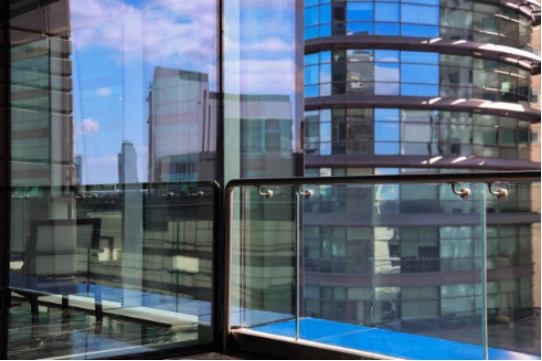
Anisotropy is not a geometric wave or bend. The quench creates a residual-stress pattern in heat-treated glass. Under polarized light, different areas can transmit light differently, producing iridescent, shadow-like, or spotted patterns. The effect may be more visible in bright sky conditions, through polarized sunglasses, or in camera images.
This distinction prevents a common inspection error: a flat lite may show anisotropy, while a bowed lite may show distorted reflections without a pronounced anisotropy pattern. ASTM C1901 provides a repeatable method for measuring optical retardation in flat architectural glass. It does not, by itself, create one universal pass/fail threshold for every facade. The project team still needs to define a metric or visual benchmark that suits the application.
How to Inspect Architectural Glass Consistently
A defensible inspection separates factory shape, stress pattern, and installed-system effects.
- Freeze the inspection basis. Record the glass type, nominal thickness, dimensions, coating, heat-treatment type, applicable standard, instrument, support condition, temperature, viewing distance, angle, background, and lighting.
- Confirm roller orientation. Mark or document the furnace direction. Measure roller wave perpendicular to the rollers, using the agreed straightedge, gauge, scanner, or optical instrument. Do not compare values produced by different methods as if they were interchangeable.
- Measure overall bow separately. Follow the named standard or approved procedure for supporting the lite and establishing the reference line. Record the maximum deviation, panel orientation, and whether the measurement was made before lamination or IGU assembly.
- Evaluate anisotropy under relevant light. If it is a project concern, use optical-retardation measurement and a full-scale visual mock-up. Review the mock-up at realistic facade angles and daylight conditions, not only under factory lighting.
- Recheck after installation. Glazing pressure, frame alignment, wind load, temperature, barometric pressure, and altitude changes can alter reflections. An installed appearance issue is not automatically proof of a heat-treatment defect.
Process stability also matters. For repeated facade panels, agree whether visually adjacent lites should be produced on the same equipment with consistent settings and orientation. A supplier’s glass processing equipment page is a starting point, but project approval should rely on samples, mock-ups, inspection records, and the agreed acceptance plan.
A Procurement Checklist for Heat-Treated Glass
Include the following information in the RFQ, purchase order, or quality plan:
- Panel schedule, sizes, nominal thicknesses, glass build-ups, coatings, frits, and required heat treatment.
- Applicable product and test standards, including the required edition.
- Roller direction and the orientation required after installation.
- Separate roller-wave and overall-bow methods, units, locations, exclusions, and limits.
- The anisotropy measurement protocol, reporting metric, visual conditions, and agreed acceptance level.
- Full-scale mock-up size, elevation, viewing distances, lighting, and approval authority.
- Requirements for batch consistency, inspection reports, traceability, packaging, and handling.
Avoid accepting phrases such as “no distortion” without a method. Also avoid approving from one close-range phone photo; camera polarization, lens position, reflections, and installation loads can misrepresent the cause. For panels involving holes, notches, curves, or heat-soak requirements, review the processing route for custom tempered glass before releasing final drawings.
FAQ
These answers address the points most likely to affect specification, sampling, and acceptance.
Is Anisotropy a Defect in Tempered Glass?
Not by its mere presence. It is an inherent optical effect of the residual-stress pattern created during heat treatment. Whether its visibility is acceptable depends on the project’s agreed measurement method, viewing conditions, benchmark, and acceptance criteria.
Can Roller Wave Be Eliminated Completely?
Good furnace control, suitable loading, consistent recipes, appropriate glass thickness, and inspection can reduce roller wave. Heat treatment still carries an inherent risk of some surface distortion, so a measurable limit and required roller orientation are more useful than an absolute promise.
How Should Overall Bow Be Measured?
Use the method required by the named standard or approved project procedure. The specification should define how the lite is supported, its orientation, the reference line or plane, measurement locations, units, and the stage of production at which inspection occurs.
What Should Be Included in a Heat-Treated Glass RFQ?
Provide the panel schedule, build-up, sizes, coating, heat treatment, processing details, applicable standards, roller orientation, separate distortion limits, anisotropy protocol, mock-up conditions, reporting requirements, packaging, and the party authorized to approve appearance.
Specify the Visual Outcome Before Ordering
Before production, contact Landson Glass and send the drawings, panel schedule, glass build-up, coating details, required standards, roller orientation, visual limits, and mock-up conditions. The team can then review manufacturability and propose a quality-control plan.