

Le double vitrage et le vitrage feuilleté acoustique permettent tous deux de réduire le bruit, mais ils agissent différemment. Le double vitrage standard repose principalement sur la séparation des vitres et l'espace d'air entre elles.
Le verre feuilleté acoustique utilise une couche intermédiaire spéciale pour amortir les vibrations du verre. Dans les projets exigeants, il est souvent installé comme l'une des vitres d'un double vitrage.
Quelle est la différence entre le double vitrage et le verre feuilleté acoustique ?
Le double vitrage, également appelé unité de vitrage isolant Un vitrage isolant (VI) est constitué de deux vitres séparées par une lame d'air étanche. Cette lame d'air peut contenir de l'air sec ou un gaz inerte comme l'argon. Sa fonction principale est l'isolation thermique, mais il contribue également à une certaine amélioration acoustique.
Le verre feuilleté acoustique est fabriqué en collant deux feuilles de verre avec une couche intermédiaire insonorisante. Cette couche peut ressembler à un film de verre feuilleté standard, mais son comportement acoustique est différent. Elle réduit les vibrations et limite la transmission de l'énergie sonore à travers le verre.
L'un est un vitrage. L'autre est une composition de verre.
Comment chaque type de verre réduit-il le bruit ?
Le contrôle acoustique dépend de la masse, de la rigidité, de l'amortissement, de l'écartement des vitres et de la fréquence. Modifier un seul élément peut être utile, mais c'est l'ensemble de la structure qui détermine le résultat.
Comment fonctionnent les commandes de double vitrage ?
Dans le double vitrage, la lame d'air qui sépare les deux vitres réduit la transmission directe du son. On obtient généralement de meilleurs résultats avec des vitres d'épaisseurs différentes.
Un ensemble symétrique, par exemple composé de deux vitres de 6 mm chacune (verre + cavité + verre de 6 mm), permet aux deux vitres de réagir de manière similaire. Un ensemble asymétrique, par exemple composé de deux vitres de 8 mm chacune (verre + cavité + verre de 6 mm), modifie la résonance de chaque vitre. Cette réponse plus large est généralement plus efficace contre les bruits urbains mixtes.
Comment le verre feuilleté acoustique contrôle le son
Verre feuilleté acoustique Son fonctionnement repose sur l'amortissement. Lorsque la pression acoustique atteint le verre, la couche intermédiaire acoustique réduit les vibrations transmises entre les feuilles collées.
La différence est surtout perceptible dans les plages de fréquences où le verre monolithique ordinaire a tendance à perdre en performance. La circulation en est un bon exemple, car il ne s'agit pas d'un son uniforme. Les moteurs, les pneus, les klaxons et l'état de la chaussée créent un mélange changeant de basses et de moyennes fréquences.
Lequel est le plus performant contre le bruit de la circulation, des avions et de la parole ?
La réponse dépend de l'accumulation de verre et non pas seulement de l'étiquette du produit.
| Facteur de bruit ou de conception | Double vitrage standard | Verre feuilleté acoustique |
| bruit urbain général | Raisonnable avec une construction asymétrique appropriée | Généralement plus fort lorsqu'il est correctement spécifié |
| Circulation routière | Performances modérées | Meilleur amortissement sur les fréquences difficiles |
| bruit des avions et des trains | Souvent insuffisant à lui seul | Plus adapté, notamment à l'intérieur d'une unité de vitrage isolant (UVI). |
| Confidentialité de la parole | Convient aux chambres normales | Privilégié pour les salles de réunion et les espaces sensibles |
| Isolation thermique | Fort | Limité lorsqu'il est utilisé comme simple vitrage feuilleté |
| Sécurité après la casse | Cela dépend du choix du verre | Des fragments restent liés à la couche intermédiaire. |
Les valeurs STC ou Rw sont utiles pour les comparaisons générales. L'OITC peut s'avérer plus pertinent lorsque le principal souci concerne le bruit des transports extérieurs. Même dans ce cas, les valeurs doivent se référer à la configuration de vitrage testée, et non à un produit similaire, à une cavité différente ou à un argument marketing.
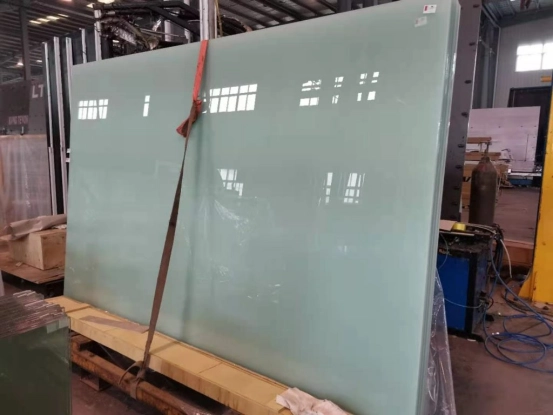
Quand le double vitrage standard est-il suffisant pour l'isolation phonique ?
Le double vitrage standard est généralement suffisant lorsque l'environnement extérieur n'est pas extrême et que la performance thermique reste la principale priorité en matière de conception.
Les applications typiques comprennent les immeubles de bureaux de faible hauteur situés sur des routes secondaires, les ensembles résidentiels éloignés des axes de transport et les bâtiments commerciaux présentant un niveau sonore modéré en journée.
Il est préférable d'opter pour une construction asymétrique. L'utilisation de vitres d'épaisseurs différentes offre généralement une meilleure isolation acoustique que deux vitres identiques.
Double vitrage standard Cela se justifie également lorsque le projet ne comporte pas d'objectif acoustique précis. Investir dans une couche intermédiaire acoustique spécialisée sans vérifier l'exposition réelle au bruit peut engendrer des coûts supplémentaires sans pour autant apporter d'amélioration significative à l'intérieur de la pièce.
Quand faut-il spécifier du verre feuilleté acoustique ?
Il convient d'envisager l'utilisation de vitrages feuilletés acoustiques lorsque le projet se situe à proximité d'aéroports, de voies ferrées, d'autoroutes, d'installations industrielles ou de quartiers de divertissement très fréquentés.
Il convient également aux espaces où les perturbations ont des conséquences commerciales directes. Les chambres d'hôtel en sont un exemple évident. Il en va de même pour les services hospitaliers, les salles de classe, les studios d'enregistrement, les bureaux de direction et les espaces de réunion nécessitant la confidentialité des conversations.
Il ne faut pas considérer automatiquement le verre feuilleté PVB standard comme du verre feuilleté acoustique. Bien que les deux produits retiennent les bris de verre, leurs couches intermédiaires ne sont pas conçues pour offrir des performances d'isolation acoustique identiques.
Le double vitrage acoustique feuilleté est-il la meilleure solution ?
Pour les façades exigeantes, souvent oui.
Un vitrage bien conçu peut associer une vitre feuilletée acoustique, une lame d'air adaptée et une seconde vitre d'épaisseur différente. Un revêtement à faible émissivité peut être ajouté lorsque des performances thermiques ou de contrôle solaire sont requises.
Cela ne signifie pas que chaque projet nécessite la structure la plus robuste. Une plus grande quantité de verre augmente le poids, les besoins en quincaillerie, les frais de transport et la charge sur le cadre. Le surdimensionnement est fréquent, généralement parce que la source de bruit n'a jamais été correctement mesurée.
La solution la plus efficace est généralement une solution équilibrée : une masse suffisante, une asymétrie utile, un amortissement acoustique et un système de cadre capable de maintenir l’étanchéité à l’air.
Un projet d'hôtel d'aéroport illustre cette approche. Remplacer un vitrage isolant symétrique par un autre, également symétrique, plus épais, n'apporte qu'une amélioration limitée. L'installation d'un vitrage intérieur feuilleté acoustique et l'ajustement de l'épaisseur du vitrage extérieur peuvent s'avérer bien plus efficaces, notamment si l'étanchéité du cadre est améliorée simultanément.
Comment les acheteurs doivent-ils choisir la bonne configuration de vitrage acoustique ?
Un processus de sélection pratique devrait couvrir quelques points :
- Identifiez la principale source de bruit et le moment de la journée où elle est la plus perturbatrice.
- Confirmez si STC, Rw ou OITC est l'exigence déterminante du projet.
- Demander les données d'essai pour les épaisseurs réelles du verre et la configuration de la cavité.
- Coordonner les performances acoustiques avec la valeur U, le contrôle solaire et les exigences de sécurité.
- Vérifier l'étanchéité du cadre, des joints, des évents et l'installation du périmètre.
- Veuillez confirmer la taille, le poids, les limites de traitement et les conditions d'expédition du verre avant approbation.
Pour les projets d'exportation, l'emballage et la manutention méritent également une attention particulière. Les éléments stratifiés et isolés peuvent être lourds, notamment les panneaux de façade de grande taille. Une conception acoustique performante, mais présentant des dommages sur les bords à la livraison, n'est pas une bonne conception.
Double vitrage ou verre feuilleté acoustique : lequel choisir ?
Optez pour le double vitrage standard lorsque la réduction modérée du bruit, l'isolation thermique et la maîtrise des coûts sont les principales priorités.
Choisissez le vitrage acoustique feuilleté lorsque le bruit extérieur, la sécurité ou la confidentialité des conversations sont des critères prioritaires.
Utilisez du verre feuilleté acoustique dans un double vitrage lorsque le bâtiment doit gérer des bruits de transport importants tout en répondant aux exigences de performance énergétique.
verre Landson Nous proposons des solutions sur mesure pour le vitrage acoustique feuilleté et isolant destinées aux projets internationaux de fenêtres, portes et façades rideaux. Un devis détaillé inclut les dimensions des panneaux, la composition du verre, les exigences de revêtement, le niveau d'isolation acoustique visé, les normes de sécurité et la quantité commandée. Pour discuter d'une solution de vitrage acoustique personnalisée, veuillez communiquer à Landson Glass les dimensions de verre souhaitées, l'isolation acoustique cible, le revêtement, les normes de sécurité et la quantité commandée.
Questions fréquemment posées
Q : Le verre feuilleté acoustique est-il toujours meilleur que le double vitrage ?
Ce n'est pas toujours le cas. Le vitrage feuilleté acoustique offre généralement une meilleure isolation, tandis que le double vitrage assure une isolation thermique supérieure. Un projet nécessitant les deux utilise souvent du vitrage feuilleté acoustique à l'intérieur d'un vitrage isolant.
Q : Une cavité d'air plus large améliore-t-elle toujours l'isolation acoustique ?
Non. La largeur de la cavité influe sur les performances acoustiques, mais cette relation n'est ni illimitée ni linéaire. L'épaisseur du panneau, son asymétrie, la conception du cadre et la qualité de l'installation restent des facteurs importants.
Q : Peut-on combiner du verre à faible émissivité avec du verre feuilleté acoustique ?
Oui. Un revêtement à faible émissivité peut être intégré à un double vitrage acoustique. Il convient de vérifier l'état de la surface du revêtement et l'épaisseur du verre auprès du fabricant afin d'éviter tout problème de compatibilité ou de fabrication.
Q : Un verre plus épais est-il suffisant pour bloquer le bruit de la circulation ?
Pas toujours. L'ajout de masse peut être bénéfique, mais une simple vitre épaisse peut tout de même offrir de mauvaises performances à certaines fréquences. Un vitrage asymétrique avec une couche intermédiaire acoustique est souvent plus efficace.
Q : Les acheteurs doivent-ils se fier uniquement à la cote STC ?
Non. L'analyse STC est utile, mais elle ne représente pas toujours fidèlement le bruit du trafic routier ou des avions à basse fréquence. Une analyse OITC ou une analyse acoustique spécifique au projet peut constituer une meilleure base pour le choix de la façade extérieure.