

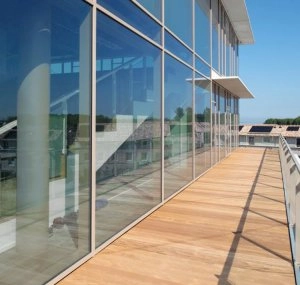
High-rise curtain wall glass must carry wind load, limit solar heat, retain broken glass, meet code, and remain visually consistent.
A darker coating may cut cooling load but reduce daylight. A thicker lite may resist pressure yet create more distortion. The useful question is: what build up solves the risks on this elevation?
What Performance Requirements Should Define a High-Rise Curtain Wall Glass Configuration?
Start with project data, not a catalogue thickness.
Design wind pressure matters, but so do panel size, aspect ratio, support condition, and whether the glass is captured or structurally glazed. Two panels at the same elevation may still need different thicknesses.
Post breakage behavior is another key decision. A panel forty floors above a public entrance deserves stricter retention criteria.
Thermal requirements should be stated as U-value, solar heat gain coefficient, visible light transmission, and condensation resistance. “Low-E glass” alone is not a specification.
Before selecting the build up, confirm:
- Design pressure and panel dimensions
- Safety and fallout requirements
- Thermal, daylight, and acoustic targets
- Curtain wall depth and sealant compatibility
- Applicable code and test standards
Thickness comes later.
What Is the Best Baseline Glass Build Up for a Typical High-Rise Curtain Wall?
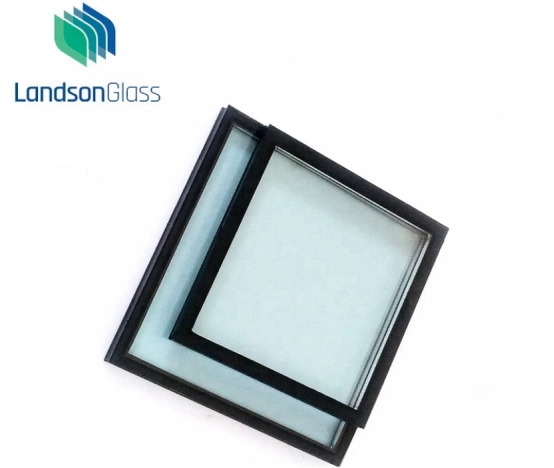
For many commercial towers, a practical starting point is a double glazed Low-E IGU with heat treated glass. Lamination is added where fragment retention, impact resistance, or acoustics justify it.
It still needs structural review and mock up testing.
Exterior Lite
The exterior lite takes weather, solar load, and much of the wind pressure. Heat strengthened glass is often used where the lite is laminated and controlled post breakage behavior matters. Fully tempered glass is selected where higher strength or a safety breakage pattern is required.
On a coastal tower with large vision panels, a laminated outer lite may reduce fallout risk after breakage. Under strong wind, that looks sensible.
Thickness must be calculated. A generic 6 mm or 8 mm recommendation is not adequate for a high rise façade.
Insulating Cavity and Low-E Coating
The cavity controls much of the thermal performance. Important variables include cavity width, gas fill, spacer type, edge seal, and coating position.
A solar control Low-E coating is normally placed on a protected IGU surface. In hot climates, lower solar heat gain is usually the priority. In colder climates, U-value may matter more.
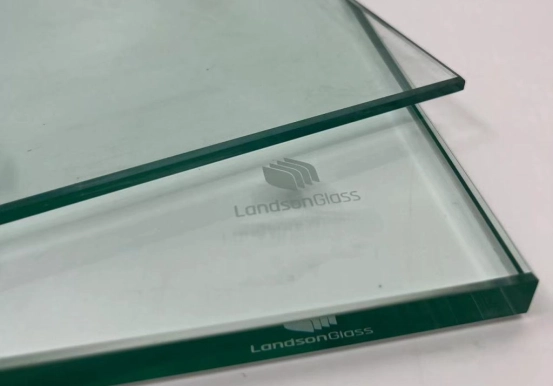
Landson Glass supplies configurable Low-E IGUs for curtain wall work, allowing coating, spacer, gas fill, and glass thickness to be coordinated as one build up.
Interior Lite
The interior lite affects safety, acoustics, thermal stress, and post breakage behavior.
A heat treated monolithic inner lite may suit standard vision areas. Laminated glass is often used near occupied edges, barriers, atriums, or locations where fragments must remain attached.
The laminated lite does not always belong on the same side. Its position should follow the hazard and local code.
Which Glass Configuration Works Best for Different High-Rise Project Conditions?
Different elevations of one tower may need different glass make ups. A west façade does not behave like a shaded north elevation. Corner panels also see different wind effects from central bays.
| Project condition | Recommended configuration direction | Main purpose |
| Hot or high solar-gain climate | Solar control Low-E IGU with heat treated lites | Reduce cooling load and glare |
| Cold climate | Low-E double or triple IGU with warm edge spacer | Improve U-value |
| Coastal or high wind location | Calculated heat treated IGU with laminated retention where required | Resist pressure and control fallout |
| Airport or dense urban location | Asymmetrical laminated IGU with acoustic interlayer | Improve sound insulation |
| Oversized vision panels | Thicker heat treated or laminated lites with flatness control | Manage deflection and optics |
| Spandrel zones | Heat treated glass with ceramic frit and coordinated insulation | Conceal floor zones |
A common value engineering move is to copy one make up across all elevations. It simplifies procurement, but can create excess solar gain and poor color balance.
Landson Glass can process different Low-E, laminated, and fritted configurations within one façade package. The elevation schedule must be clear before cutting begins.
When Should Heat Strengthened, Tempered or Laminated Glass Be Used?
Heat strengthened glass sits between annealed and fully tempered glass in strength. It is commonly used as a ply in laminated façade glass where post breakage behavior matters.
Fully tempered glass provides higher mechanical and thermal strength and breaks into small particles. The trade off is possible spontaneous breakage linked to nickel sulfide inclusions.
Heat soak testing reduces that risk. It does not eliminate it.
Laminated glass solves a different problem. The interlayer retains fragments and may improve acoustic, security, or residual structural performance. It is not a substitute for calculation.
These categories overlap. A lite can be heat strengthened and laminated, or fully tempered and laminated. Landson Glass uses both constructions depending on the required breakage behavior.
How Should Low-E Coatings, Ceramic Frit and Spacers Be Specified?
Coatings, frit, and edge components are often reviewed late. That is a mistake. They affect performance, appearance, and mock up compatibility.
Match the Coating to Climate and Orientation
Coating selection should consider SHGC, U-value, visible light transmission, exterior reflectance, and color.
A low-SHGC coating may suit a west elevation but look unnecessarily dark on a shaded north side. Some projects use different coating performance by orientation while keeping a similar exterior color family.
Review full size samples outdoors. Small hand samples under office lighting hide a great deal.
Coordinate Frit, Spacers and Edge Seals
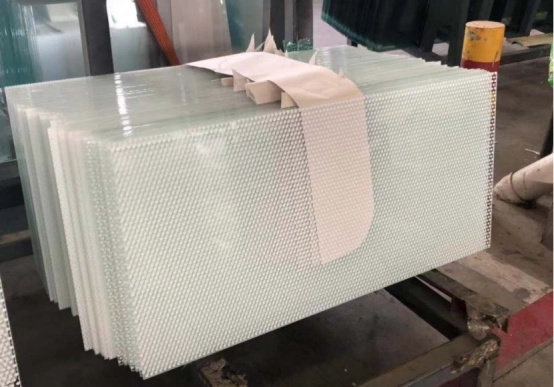
Ceramic frit is often used in spandrel areas, glare control zones, and selected bird friendly patterns. The difficult part is matching vision and spandrel glass under changing light.
Spacer type affects edge temperature and sightline. Edge deletion must suit the coating. Secondary seals must be compatible with structural silicone and the curtain wall system.
Landson Glass’s ceramic frit and Low-E IGU processing can support coordinated vision and spandrel units. Coating, frit, sealant, and edge geometry should be reviewed together.
What Should Buyers Verify Before Approving the Final Glass Configuration?
Approval should be based on documents and testing, not a short description in a quotation.
Check:
- Structural calculations using actual panel sizes and support conditions
- Thermal data for the complete IGU build up
- Required ASTM, EN, AS/NZS, or local compliance records
- Heat treatment, heat soak, and lamination records where specified
- Full size mock ups for color, reflectivity, roller wave, and anisotropy
- Air, water, and structural testing of the curtain wall system
- Sealant compatibility, tolerances, and batch traceability
The processor should receive the elevation schedule, make up drawings, coating surface, edge deletion requirements, and performance criteria. “Low-E laminated IGU” is not enough information for fabrication.
Conclusion: Select the Configuration Around Project Risk, Not a Standard Recipe
A workable curtain wall configuration is usually a set of compromises, not one ideal answer.
Start with wind pressure, panel size, safety risk, climate, acoustics, and system geometry. Then refine the build up. Good façade decisions are made before the order and before the mock up.
Send panel sizes, design pressures, climate data, performance targets and applicable standards to the façade engineer and glass processor for final optimization.
FAQ
Q: Is laminated glass always required for high rise curtain walls?
No. It depends on code, fallout risk, barrier conditions, panel location, and post breakage requirements. Some areas may use monolithic heat treated glass, while others require laminated retention.
Q: Should high rise curtain wall glass be tempered or heat strengthened?
Both are used. Fully tempered glass offers higher strength and a safety breakage pattern. Heat strengthened glass is often selected in laminated façade assemblies where post breakage behavior is a priority.
Q: Is a double glazed Low-E IGU enough for every climate?
No. Hot climates may need stronger solar control. Cold climates may require improved U-value, warm edge spacers, or triple glazing. Orientation can also change the coating requirement.
Q: Can one glass configuration be used across the entire building?
Sometimes, but it is often inefficient. Wind pressure, solar exposure, panel size, and appearance vary by elevation and height.