

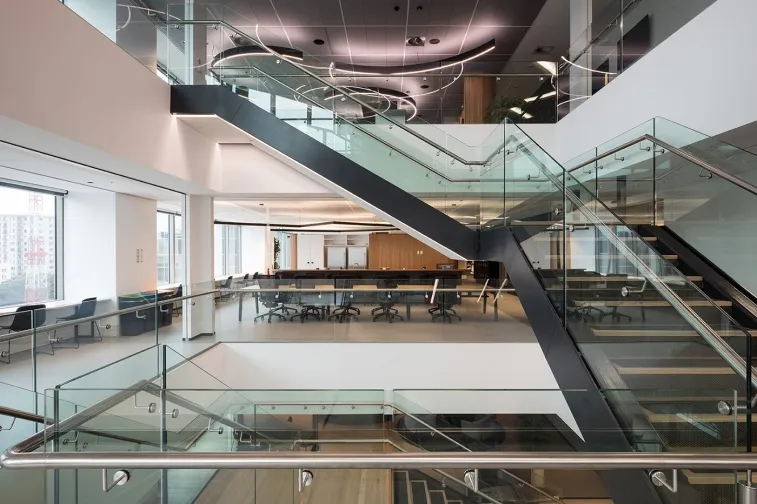
Airports and transport buildings ask more from glass than a typical office façade. A panel may sit beside a taxi lane, above a crowded concourse, or close to an active railway. It must admit daylight while handling impact, noise, wind, and difficult replacement work.
Why Do Airports and Transport Buildings Require Specialized Glazing?
Passenger loads rise sharply around departure waves. Sliding doors cycle constantly. Luggage carts strike corners. Exterior façades face aircraft, railway, and road noise, often together.
Wide glass modules preserve visibility, but larger panes carry higher wind loads and demand better edge quality, framing, and installation tolerances. Replacing a panel above a security queue or platform may require night work and temporary closure.
Safety, acoustics, and durability cannot be designed separately. A change in pane thickness, interlayer, cavity, coating, or frame may improve one area and weaken another.
How Does Safety Glass Protect Passengers and High Traffic Areas?
The important question is not only whether the glass breaks. It is what happens after breakage.
Impact Resistance and Post Breakage Safety
Tempered glass resists mechanical and thermal stress better than annealed glass. When broken, it fragments into smaller pieces, but it does not keep the opening closed.
Laminated glass uses an interlayer to retain fragments. It can stop fragments falling into a circulation route and provide temporary containment.
Toughened laminated glass is often specified where impact resistance and post breakage retention are both required. Landson Glass supplies structural toughened laminated configurations for these applications, although the final build up still depends on pane size, supports, holes, and design loads.
More thickness is not automatically safer. Poor edge detailing can cancel the benefit.
Where Is Safety Glazing Most Important?
Typical high risk areas include:
- Entrance doors and glazed sidelights
- Balustrades, stairs, bridges, and elevated walkways
- Platform screens and passenger barriers
- Check in zones exposed to baggage carts
- Canopies and overhead glazing
- Façades above pedestrian routes
Security requirements need separate review. Forced entry, blast, and ballistic resistance are different performance classes. “Laminated safety glass” alone does not confirm any of them.
How Can Glazing Reduce Aircraft, Rail and Traffic Noise?
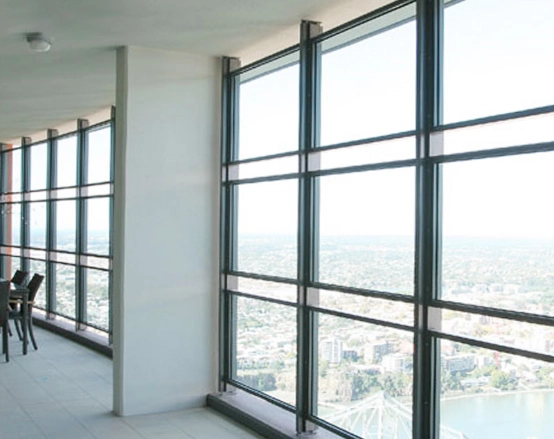
Transport noise is rarely steady. Aircraft create strong low frequency energy. Trains add rolling noise, brake squeal, and short pressure events. Standard double glazing may still leave the low rumble passengers notice in waiting areas.
Why Acoustic Laminated Glass Performs Better Than Standard Glass
Acoustic laminated glass uses a damping interlayer to reduce vibration through the pane. Performance depends on the whole build up, not only total glass thickness.
A useful arrangement may combine an acoustic laminated lite with a monolithic lite of a different thickness. The asymmetry helps avoid matching resonance behaviour. Landson Glass sound control laminated glass can be configured with acoustic PVB around a required Rw, STC, or OITC target while also providing safety retention.
A runway side waiting lounge showed the issue clearly. A heavy symmetrical IGU looked acceptable on the schedule, yet low frequency noise remained obvious. Unequal pane thicknesses and an acoustic laminate produced a more useful result.
When Should Acoustic Laminated Glass Be Used in an IGU?
An acoustic laminate is often placed within an insulated glass unit when thermal control is also required. The cavity, spacer, Low-E coating, frame, and seals then become part of the acoustic design.
Air leakage is unforgiving. High performing glass in a weakly sealed frame can disappoint on site. Mullion joints, doors, smoke vents, and façade penetrations deserve equal attention.
For airports and rail projects, OITC may be more informative than STC because it gives greater weight to lower frequency transport noise. Test reports should match the proposed build up as closely as possible.
What Makes Transport Building Glass Durable Over Its Service Life?
Glass itself is rarely the only weak point. Edges, seals, coatings, fittings, and installation details usually decide how the system ages.
Resistance to Weather, Heat and Daily Operation
Large façades may experience strong wind, partial shading, and sharp temperature differences across one pane. Heat treated glass may be needed where Low-E coatings, frit bands, internal blinds, or deep mullion shadows increase thermal stress.
Rail vibration can affect gaskets, fittings, and sealant joints. Exposed laminated edges need protection from moisture. IGU edge seals must be compatible with the framing and structural silicone.
Factory quality matters. Edge chips, inaccurate holes, poor laminate alignment, or excessive roller wave distortion often become installation problems.
Maintenance and Replacement Considerations
Transport operators need panels that can be cleaned and replaced without closing large areas. Module size, lifting access, replacement routes, and spare stock should be discussed early.
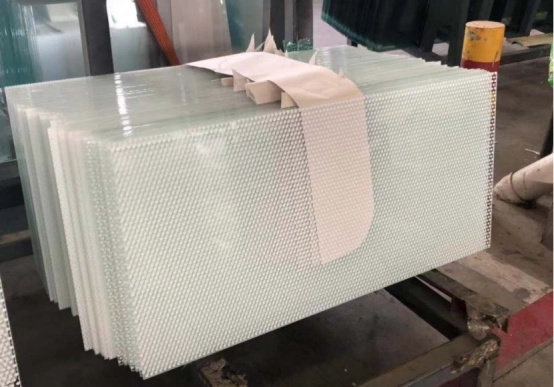
Ceramic frit is useful for screening, bird deterrence patterns, or solar control bands. Because the ink is heat fired onto the glass, it usually tolerates repeated cleaning better than surface applied films.
Replacement appearance also deserves attention. A replacement pane with a different coating colour can be obvious. Approved samples and archived fabrication records reduce that risk.
Which Glass Configuration Fits Each Airport or Transport Application?
A runway façade and an internal retail partition may be close together, yet require very different glass.
| Application | Main Risks | Suggested Glass Configuration | Key Checks |
| Exterior terminal façades | Noise, wind, heat gain | Acoustic laminated Low-E IGU | OITC or Rw, U-value, SHGC |
| Main entrances | Human impact, door movement | Toughened laminated safety glass | Impact class, cut outs |
| Railway platforms | Impact, vibration, crowd pressure | Structural laminated glass | Barrier load, supports |
| Waiting lounges | Noise, privacy, safety | Acoustic laminated glass | Rw, speech privacy |
| Canopies | Falling glass, weather | Engineered laminated safety glass | Residual capacity, drainage |
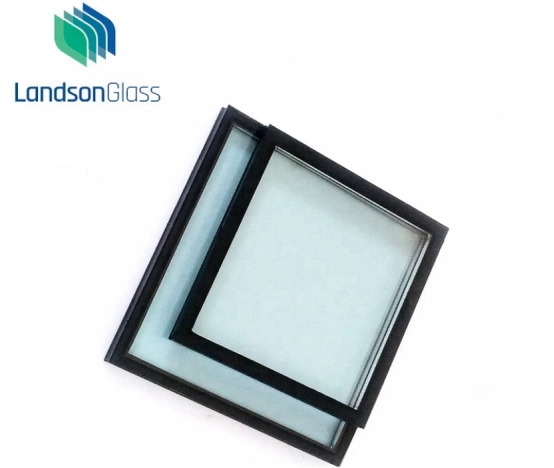
For exterior façades, Landson Glass COMF-E® Low-E IGUs can combine coated, toughened, and laminated panes in one unit. This helps when solar control, acoustic damping, and thermal insulation must be resolved together.
There are trade offs. A lower solar heat gain coefficient may reduce visible light. Very large panes may need greater thickness or additional support. Samples and calculations usually settle these issues faster.
What Should Specifiers Confirm Before Ordering Transport Building Glass?
A clear enquiry prevents the supplier from designing around assumptions. It should include:
- Panel dimensions, quantities, and support conditions
- Safety, impact, wind, barrier, and structural requirements
- Acoustic targets such as Rw, STC, or OITC
- U-value, SHGC, and visible light transmission
- Heat treatment and heat soak requirements
- Holes, notches, edgework, and frit details
- IGU cavity, spacer, gas, and sealant requirements
- Applicable standards and required reports
- Packing, lifting, shipping, and storage constraints
Drawings should show coating surfaces and laminate orientation. A reversed coating or misplaced laminate can affect performance and appearance.
How Can One Glazing System Balance Safety, Acoustics and Durability?
The practical approach is to design the glass with the frame, seals, supports, and installation method. Safety controls breakage behaviour. Acoustic design controls vibration through the build up. Durable edges, coatings, and seals keep those properties in service.
For transport projects reviewed by Landson Glass, the useful starting point is a performance brief: drawings, panel sizes, loads, acoustic targets, thermal targets, and standards. Laminated, toughened, and insulated options can then be compared by location rather than forcing one make up across the building.
FAQ
Q: Is laminated glass always required in airport façades?
No. It is commonly used where post breakage retention, acoustic damping, security, or overhead safety is required. Other areas may use tempered or heat strengthened glass, depending on risk and local regulations.
Q: Which acoustic rating is most relevant for airports?
OITC is often useful for façades exposed to aircraft and road noise because it gives more weight to lower frequencies. Rw and STC may still be required by the project specification.
Q: Can Low-E glass and acoustic laminated glass be combined?
Yes. An acoustic laminated pane can be incorporated into a Low-E IGU. Coating position, pane thicknesses, cavity, spacer, frame, and seals should be assessed together.